
April 19, 2026 · Permissionless Technologies
USDe vs UPD: Delta-Hedged Yield or Pure On-Chain Collateral?
USDe and sUPD both generate yield through delta-neutral hedging. But sUSDe has a blacklist and off-chain custody. sUPD has neither. Here's what that trust model difference means for your funds.

Ethena's pitch is elegant. Deposit ETH or stETH, get a dollar-pegged stablecoin. Stake it, earn yield. No bank, no issuer redemption window, no off-chain reserves. Sounds like the DeFi stablecoin people have been waiting for.
Until you look at where the yield comes from.
USDe maintains its peg through delta-hedging: long spot crypto collateral, short perpetual futures on centralized exchanges. The funding rate on those shorts is what generates the yield. When funding is positive - meaning more traders are long than short - Ethena collects. When funding goes negative, Ethena pays. The yield isn't magic. It's a derivatives trade running on Binance, Bybit, and OKX order books (Ethena Docs).
And there's a detail that gets buried in the documentation. The base USDe token has no blacklist. But the moment you stake it for yield - the whole point of the product - you're in sUSDe, a wrapper with a documented blacklist for sanctioned addresses. Ethena calls it a "legally required ability to freeze funds" (Ethena Staking Docs).
Your DeFi yield runs on CeFi rails, and your staking wrapper can freeze you. That's the trade. This post walks through what it means.
Key Takeaways
- USDe's base token has no per-address freeze or blacklist. But sUSDe (the staked yield-bearing wrapper) has a
FULL_RESTRICTED_STAKER_ROLEwith explicit blacklist authority for sanctioned addresses (Ethena Docs). - USDe's peg mechanism relies on short perpetual futures positions on centralized exchanges (Binance, Bybit, OKX). Ethena itself describes the design as a "CeDeFi hybrid" (Ethena Docs).
- At ~$5.8B market cap, USDe is the third-largest stablecoin - driven almost entirely by yield demand, not payment use cases.
- If funding rates go negative for extended periods, Ethena pays rather than earns. The yield that attracts holders can reverse into a cost that pressures the peg.
- UPD's base token has no yield mechanism and no blacklist. Its staking wrapper sUPD uses delta-neutral hedging for yield - the same category of mechanism as sUSDe. The difference: sUPD has no blacklist, collateral sits in on-chain escrow (not with off-exchange custodians), and there are four redemption paths instead of a single cooldown. Same trade. Different trust model.
- UPD is pre-audit and Sepolia-only. sUPD shares exchange counterparty and funding rate risks with sUSDe. The difference is in custody and censorship resistance, not in the absence of risk.
How Does USDe Actually Work?
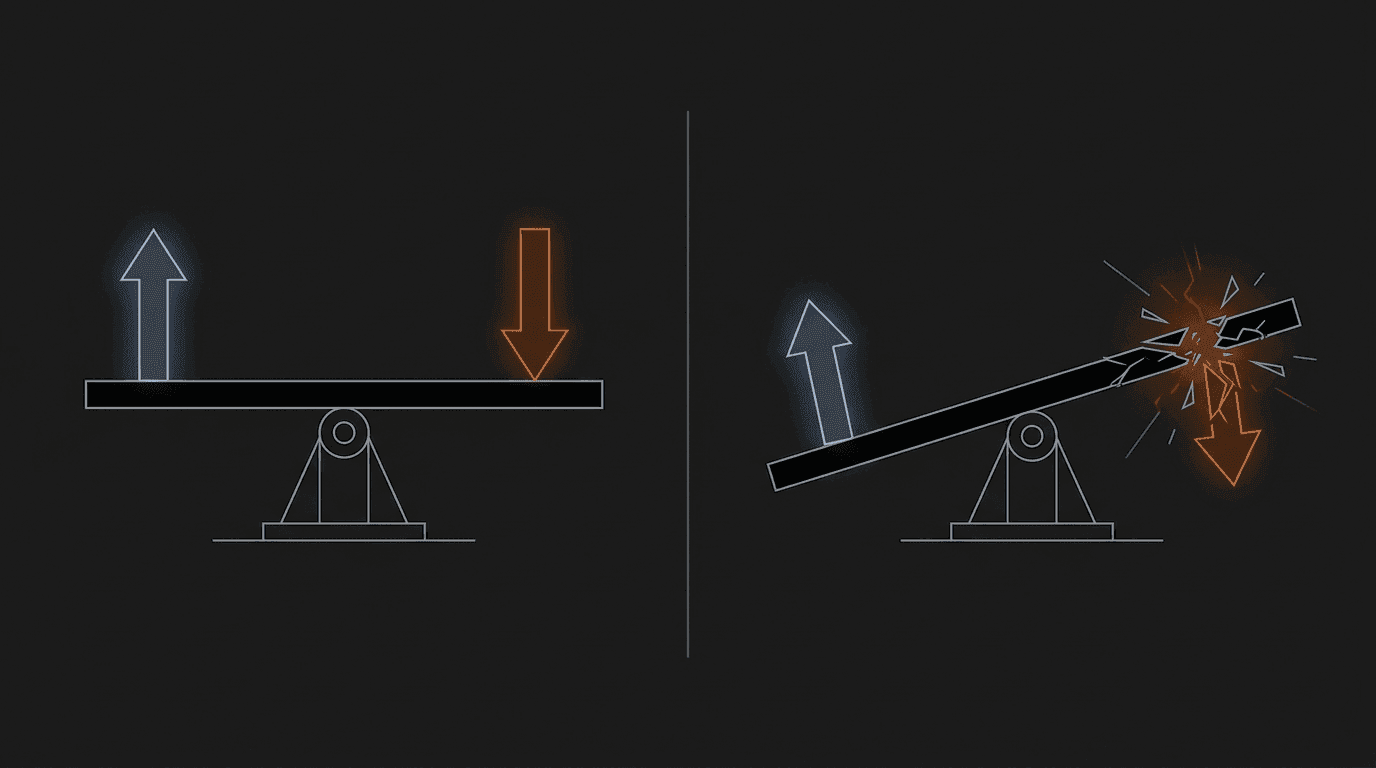
The mechanism has three moving parts. Understanding all three matters because your risk exposure changes depending on which one fails.
Part 1: Collateral deposit. Users deposit ETH, stETH, or other accepted crypto into Ethena's protocol. This collateral sits with off-exchange custodians - not in Ethena's own wallets, not on the exchanges themselves. The custody layer is separate from the trading layer.
Part 2: Delta-hedge. Ethena opens short perpetual futures positions on centralized exchanges, sized to match the dollar value of the deposited collateral. If ETH drops 10%, the collateral loses value but the short positions gain roughly the same amount. Net exposure to ETH price: approximately zero. That's the "delta-neutral" part. The peg holds because the portfolio doesn't move with crypto prices.
Part 3: Yield generation. Perpetual futures have a funding rate. When more traders are long than short, longs pay shorts. Since Ethena is structurally short, it collects funding payments when the market is bullish. These payments flow to sUSDe holders as yield. During bullish periods, this yield can be substantial - double digits annually.
So what's the catch? The mechanism works beautifully in one direction. When funding rates are positive, everyone wins. But funding rates aren't always positive. During bearish periods or market stress, shorts pay longs. Ethena goes from collecting yield to paying a cost. The protocol has a reserve fund to absorb negative funding periods, but if they last long enough, the reserve drains and the peg comes under pressure.
How long can the reserve hold? That depends on how negative the funding gets and for how long. Ethena publishes reserve data, but the honest answer is: nobody knows the breaking point until it's tested. And the last time a major crypto yield product promised sustainable returns on a mechanism most holders didn't fully understand, it was called Terra.
What's in the sUSDe Contract?
Here's where USDe splits into two stories.
The base USDe token is a straightforward ERC-20 with Ownable2Step and a single minter role. Search the contract for a freeze function or blacklist mapping. You won't find one. At the base token layer, USDe transfers are unrestricted. Ethena can't freeze your USDe (Ethena GitHub Overview).
But nobody holds base USDe for the fun of it. The entire value proposition is yield. And yield means staking into sUSDe.
The sUSDe staking contract is a different story. Ethena's own documentation is explicit:
"The Ethena Staking contract is ... with the added ability for a cooldown period upon unstaking as well as a legally required ability to freeze funds for sanctioned addresses ... this function is limited to sUSDe." (Ethena Staking Docs)
Security reviews confirm a FULL_RESTRICTED_STAKER_ROLE with addToBlacklist authority over stakers (CryptoCompare Security Review). If you're on the blacklist, your staked USDe is frozen. You can't unstake. You can't transfer your sUSDe. Your yield-bearing position becomes a locked position.
Has Ethena actually blacklisted anyone? As of early 2026, there are no widely publicized cases of individual sUSDe freezes. The functionality exists, the documentation describes it as active, but the track record is thin. Compare that to USDT's 4,163 blacklisted addresses or USDC's 600+ frozen wallets. Ethena's blacklist is loaded, not fired.
But here's the question worth asking. If you chose USDe specifically because it looks like a DeFi alternative to centralized stablecoins, did you know the yield wrapper can freeze you? Most holders interact with sUSDe, not base USDe. The product people actually use has the freeze capability. The product they think they're getting doesn't.
What Happens When Funding Rates Turn Negative?
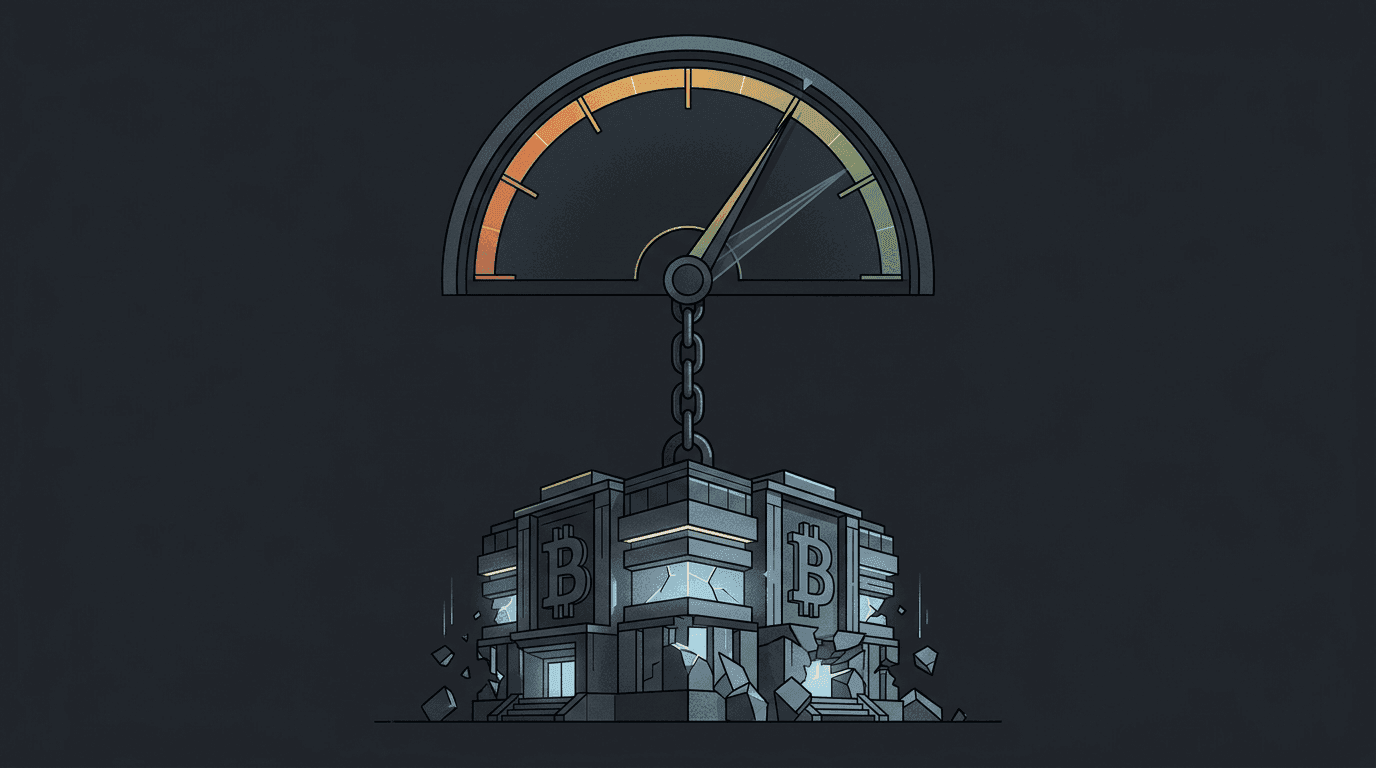
Perpetual futures funding rates are not guaranteed to stay positive. During bearish markets, funding can flip negative for weeks or months. When that happens, Ethena's short positions cost money instead of earning it.
Ethena maintains a reserve fund to cover negative funding periods. The reserve absorbs the cost so that sUSDe holders don't see their yield disappear immediately. But the reserve is finite. If negative funding persists long enough, the reserve drains.
What happens next? Several things, none of them comfortable. sUSDe yield drops to zero. Holders who entered for the yield start exiting. Redemptions increase. If the exit pressure is large enough and the market for unwinding perpetual futures positions is thin, the peg itself comes under stress.
This isn't theoretical. Funding rates on ETH perpetuals went negative during the 2022 bear market for extended periods. Ethena didn't exist yet in its current form, but the market conditions that would stress its mechanism have already occurred in recent history.
The design is also path-dependent. Ethena's short futures positions exist on centralized exchanges. If one of those exchanges goes down - through insolvency, regulatory action, or a security breach - Ethena loses its hedge on that venue. The delta-neutral position becomes delta-exposed until the position can be rebuilt elsewhere. When FTX collapsed in November 2022, any protocol running shorts on FTX lost both the position and the collateral. Ethena uses off-exchange custody specifically to mitigate the collateral risk, but the position risk remains.
Can Ethena survive a multi-week negative funding period combined with the failure of a major exchange partner? That's the tail-risk question every sUSDe holder should be able to answer. If you can't, that's information about your risk management, not about the protocol.
Why Does Anyone Hold $5.8 Billion of USDe?
Because the yield is real, and in a yield-starved DeFi environment, real yield matters.
During positive funding periods, sUSDe has delivered annualized returns that significantly exceed anything available from lending protocol deposit rates. For yield-seeking capital - hedge funds running carry trades, DeFi protocols seeking treasury returns, users maximizing capital efficiency - that's a genuine draw.
The mechanism is also genuinely clever. Delta-hedging isn't new in traditional finance. Ethena adapted it for crypto markets in a way that produces a dollar-pegged asset with native yield. That's a real innovation, not a marketing trick. The funding rate mechanism has a structural basis: crypto markets tend to be net-long, which means funding tends to be positive more often than negative.
DeFi composability adds another layer. USDe and sUSDe are integrated into Aave, Pendle, and a growing number of DeFi protocols. The network effects are building. Aave even discussed an automated freeze guardian for USDe collateral - which says something about both USDe's adoption and the risk that protocols see in it.
And at $5.8B market cap, USDe is the third-largest stablecoin globally. That's not a niche experiment. It's a top-tier stablecoin built on a fundamentally different design than everything else in the top 10.
The honest framing: USDe is the highest-yielding stablecoin design that actually works at scale. The trade-off is that the yield depends on CEX infrastructure, derivatives markets, and a reserve fund with finite depth. If you understand those dependencies and can tolerate them, USDe is a legitimate tool. If you need your stablecoin to function regardless of what happens to Binance's order books, you need something else.
How Does UPD Handle This Differently?
UPD is an over-collateralized stablecoin currently in tech-preview on Sepolia and pre-audit. The base token and the yield wrapper take different design paths from Ethena's - but not in every dimension. Honesty about the overlap matters more than a clean marketing story.
The base token: genuinely different. UPD itself doesn't delta-hedge. It doesn't run shorts on exchanges. Users deposit crypto collateral, mint UPD at a collateral ratio set by the protocol, and the stablecoin holds its peg through over-collateralization and liquidation mechanics. UPD's collateral sits entirely on-chain in smart contract escrows - no off-exchange custodians. And there is no blacklist at any layer of UPD: not on the base token, not on any protocol contract. UPD is fully permissionless, like ETH.
The yield wrapper: same mechanism, different trust model. sUPD is UPD's staking derivative — the equivalent of sUSDe. The yield mechanism is the same category as sUSDe: hedge the long-ETH exposure with short perpetual futures, collect the funding rate, target ~8-10% APY. What differs is how the hedging is administered.
Off-chain hedging is the entire economic point of being a UPD Stabilizer in the first place. When a user mints UPD against any Stabilizer's buffer, that Stabilizer takes on a long-ETH position; running a short hedge off-chain is how they make money on the trade. Most Stabilizers run their own strategies. sUPD just automates the same loop for the one Stabilizer position it owns: a REBALANCER_ROLE can withdraw stETH that's already unallocated in sUPD's escrow (withdrawExcessCollateral) to fund hedge positions on exchange venues, and can shrink the allocated portion only by burning UPD against it (unallocateCollateral). The role inherits the same per-position invariants every Stabilizer is bound by — it cannot release collateral below the minimum ratio, cannot freeze stakers, cannot touch other Stabilizers' positions, cannot change the collateral asset.
The funding rate dependency is the same as sUSDe's. The exchange counterparty risk is the same category. The architectural difference is that the hedging is decentralized at the Stabilizer level (each runs their own), with sUPD adding a programmatic rebalancer for its own position only — no central treasury operating across the whole system.
What's different is the trust architecture underneath:
No blacklist. sUPD has no FULL_RESTRICTED_STAKER_ROLE, no addToBlacklist, no freeze function. The REBALANCER_ROLE can extract already-unallocated collateral for hedging, but it cannot freeze or restrict any individual staker's position. If you stake UPD into sUPD, no admin role can blacklist you. (Unstaking via the default unstakeToUPD path can revert when the system lacks free overcollateral to mint fresh UPD for you — that's what the four redemption paths are for. None require admin permission.) This is the single biggest architectural difference from sUSDe.
On-chain collateral custody. sUPD's stETH collateral sits in on-chain escrow contracts, continuously verifiable by anyone. Ethena uses off-exchange custodians - a separate trust layer that protects collateral from exchange failure but introduces custodial counterparty risk. With sUPD, the collateral never leaves the blockchain; only the hedge positions exist on exchange venues.
Four redemption paths. sUSDe offers a cooldown period and then unstake. sUPD offers four mechanisms: instant full unstake, user-assisted unstake (provide extra UPD to free locked collateral), pro-rata unstake (accept reduced payout if system is constrained), and queued FIFO unstake (burns shares immediately, settles when collateral frees up). More exit options means fewer scenarios where you're stuck.
Shared risks to be clear about. sUPD's REBALANCER_ROLE can call withdrawExcessCollateral() to extract already-unallocated stETH to any address with no rate limits, caps, or timelock. If that key is compromised, the unallocated portion (the buffer not currently backing minted UPD) can be drained — the par-backing stETH inside PositionEscrow can only be released by burning the corresponding UPD. Not a blacklist, but a real trust dependency on the rebalancer's key hygiene. The admin can set yield up to 50% APY via setAnnualYield(), which could diverge from actual hedge returns. Exchange counterparty risk applies: hedge venues can fail, and any stETH already withdrawn to fund a hedge there shares that venue's risk. And funding rate dependency means yield disappears when funding goes negative, just like sUSDe.
USDe has been live since late 2023 and has processed billions in volume. UPD is currently in tech-preview on Sepolia, with the design drawing on lessons from an earlier beta we ran.
The regulatory position is similar in one respect: neither USDe nor UPD qualifies as a "payment stablecoin" under GENIUS or MiCA. Both sit outside the regulated payment perimeter. But USDe's reliance on centralized exchanges creates a different kind of regulatory surface - exchanges are regulated entities, and regulatory action against an exchange partner could disrupt USDe's hedge mechanism.
Head-to-Head Comparison
| Dimension | USDe | UPD |
|---|---|---|
| Market cap | ~$5.8B (Bitrue) | Pre-launch (Sepolia) |
| Issuer | Ethena Labs (protocol operator) | No issuer - users self-mint |
| Peg mechanism | Delta-neutral: long spot + short futures | Over-collateralized with liquidation |
| Collateral | ETH/stETH + short futures on CEXes | On-chain crypto only |
| Built-in yield | Yes (sUSDe: funding rate pass-through) | Yes (sUPD: delta-neutral hedge, 8-10% target) |
| CEX/exchange dependency | High: Binance, Bybit, OKX for futures | Base UPD: none. sUPD: yes (dYdX, Hyperliquid for hedge) |
| Token-level freeze (base) | None | None |
| Staking wrapper freeze | Yes: FULL_RESTRICTED_STAKER_ROLE in sUSDe | No blacklist or freeze in sUPD |
| Custody model | Off-exchange custodians | Collateral: on-chain escrow. Hedge positions: exchange venues |
| Negative funding risk | Yes: reserve fund absorbs, finite depth | Base UPD: N/A. sUPD: yes, same category |
| Exchange insolvency risk | Yes: hedge position lost if CEX fails | Base UPD: none. sUPD: hedge position lost, but collateral stays on-chain |
| Regulatory fit | Outside GENIUS/MiCA payment perimeter | Outside issuer frameworks |
| Balance sheet treatment | Crypto asset | Crypto asset |
| DeFi composability | Growing (Aave, Pendle, others) | Not yet live on mainnet |
| Current maturity | Live since late 2023, $5.8B scale | Pre-audit, testnet stage |
Which Risk Profile Fits Your Use Case?
Same Yield Mechanism, Different Trust Properties
Both sUSDe and sUPD generate yield through delta-neutral hedging. The mechanism is the same category: hold crypto collateral, short perpetual futures, collect funding rate. The difference isn't in the yield source - it's in what the staking wrapper can do to you and where your collateral lives.
sUSDe can freeze your position. sUPD cannot. sUSDe's collateral sits with off-exchange custodians. sUPD's collateral sits in on-chain escrow. Both expose you to exchange counterparty risk and funding rate dependency. But only one can blacklist your address.
For a treasury choosing between them, the question isn't "yield vs no yield" - both offer yield. The question is whether you need the guarantee that no role in the staking contract can restrict your ability to exit.
Base UPD (without staking into sUPD) does offer the simpler sovereignty trade: no yield, no exchange dependency, no blacklist, no operator risk. Holding UPD without staking it is analogous to holding base USDe without staking into sUSDe - you give up yield for a cleaner risk profile.
Custody Architecture
Ethena itself describes USDe as a "CeDeFi hybrid." The token is on-chain. The yield mechanism runs through centralized exchanges. The custody sits with off-exchange custodians. The blacklist exists on the staking wrapper. That's a lot of centralized infrastructure underneath a DeFi-looking surface.
UPD's base layer is fully on-chain: collateral, minting, transfers, liquidations all happen on the blockchain with no off-chain dependencies. sUPD's collateral also stays on-chain in escrow contracts - only the hedge positions exist on exchange venues. This means that even if an exchange fails, sUPD's underlying collateral is recoverable on-chain. With Ethena, the collateral is with custodians - protected from exchange failure, but introducing a different trust layer.
Maturity and Track Record
USDe has been live since late 2023. It has scaled to $5.8B. It has survived multiple funding rate fluctuations. It hasn't yet been tested by a prolonged negative funding period or a major exchange partner failure, but it has operational history.
UPD is in tech-preview on Sepolia, with the design drawing on lessons from an earlier beta we ran. It hasn't accumulated USDe's depth of live mainnet history at scale.
When to Use Each
When USDe Makes Sense
- Treasury operations seeking native yield on dollar-pegged assets where CEX dependency is an acceptable trade-off.
- Carry trade strategies that explicitly want exposure to the perpetual futures funding rate.
- DeFi positions in protocols that have integrated sUSDe as collateral (Aave, Pendle, others).
- Short-to-medium duration holdings where the negative funding tail risk can be monitored and managed.
When Pure On-Chain Collateral Matters
- Long-duration positions where CEX insolvency or regulatory action against an exchange partner is an unacceptable risk.
- Protocol architectures that need guarantees about collateral availability without off-chain dependencies.
- Use cases requiring non-freezable stablecoins at every layer, including any staking or yield wrappers.
- Treasuries in the DeFi-tier of the two-tier stablecoin market that can't afford to discover their stablecoin's peg depends on a single exchange's solvency.
Frequently Asked Questions
Can USDe be frozen?
The base USDe token has no freeze function or blacklist. But sUSDe - the staked, yield-bearing version that most holders actually use - has a documented FULL_RESTRICTED_STAKER_ROLE with blacklist authority. Ethena describes this as a "legally required ability to freeze funds for sanctioned addresses." No widely publicized individual freezes have occurred as of early 2026, but the capability is active.
What happens if Binance goes down?
Ethena's delta-hedge relies on short perpetual futures on centralized exchanges. If a major exchange partner fails, the short position on that venue is lost. The delta-neutral portfolio becomes partially unhedged, exposing USDe to crypto price movements until the position is rebuilt elsewhere. Off-exchange custody protects the collateral from being trapped on the exchange, but the hedge itself is gone.
How is USDe different from Terra/UST?
Terra used an algorithmic design backed by its own governance token (LUNA) with no external collateral. USDe uses real crypto collateral plus exchange-traded derivatives. The mechanisms are fundamentally different. However, both share a common risk pattern: yield-driven adoption that can reverse quickly when the mechanism faces stress. USDe's design is more sound than Terra's, but "better than Terra" is a low bar.
Does UPD offer any yield?
Base UPD has no built-in yield - it's a pure over-collateralized stablecoin. But sUPD is a staking derivative that generates yield through delta-neutral hedging, the same category of mechanism as Ethena's sUSDe. The difference is in the trust model: sUPD has no blacklist or freeze function, collateral sits in on-chain escrow rather than with off-exchange custodians, and there are four redemption paths instead of a single cooldown. The yield mechanism is similar. The custody and censorship-resistance properties are not.
Which stablecoin is "safer"?
Neither is universally safer. USDe concentrates risk in derivatives markets, CEX infrastructure, and a reserve fund with finite depth. UPD concentrates risk in smart contract security, oracle reliability, and collateral volatility - with the added caveat that the code is pre-audit. The question isn't which is safer in absolute terms. It's which failure modes you can survive, monitor, and manage.
Conclusion
USDe is a genuinely innovative design. Delta-hedging for a dollar-pegged asset with native yield is a real contribution to stablecoin architecture. The $5.8 billion in adoption isn't an accident - the yield is real, the mechanism is clever, and the DeFi integration is growing.
USDe and UPD share more mechanism than either community might expect. Both base tokens are relatively clean ERC-20s with no blacklist. Both yield wrappers use delta-neutral hedging on exchange venues to generate returns. Both carry exchange counterparty risk and funding rate dependency in the yield layer.
The difference is in what the wrapper can do to you and where your collateral lives. sUSDe can freeze your staked position. sUPD cannot — there is no blacklist, no freeze function, no restricted staker role. sUSDe's collateral sits with off-exchange custodians. sUPD's collateral sits in on-chain escrow; the portion the rebalancer has withdrawn to fund the off-chain hedge shares the venue's risk (same as Ethena), but the on-chain escrow portion stays verifiable at any time and is bounded by the per-position minimum collateral ratio.
Same trade. Different trust model. Both are legitimate choices. Neither is a free lunch.
- USDT vs UPD: $4.2 Billion Frozen - and Counting - blacklist plus burn at scale
- USDC vs UPD: One Man's Judgment Call - discretionary freeze governance
- PYUSD vs UPD: PayPal's Two-Transaction Wipe - freeze and wipe in two calls
- DAI vs UPD: When Decentralized Isn't Decentralized Enough - collateral-level centralization risk
- The Two-Tier Stablecoin Market - how regulated and non-freezable stablecoins coexist
UPD is pre-audit and currently deployed on Sepolia. The comparison in this post is architectural and educational, not investment or legal advice.