
April 12, 2026 · Permissionless Technologies
Stablecoin Market Map 2026: The Top 10 by Architecture, Not Just Market Cap
Market cap tells you who is biggest. It doesn't tell you who can freeze your funds. A 2026 breakdown of 10 stablecoins by architecture, freeze risk, and DeFi fit.
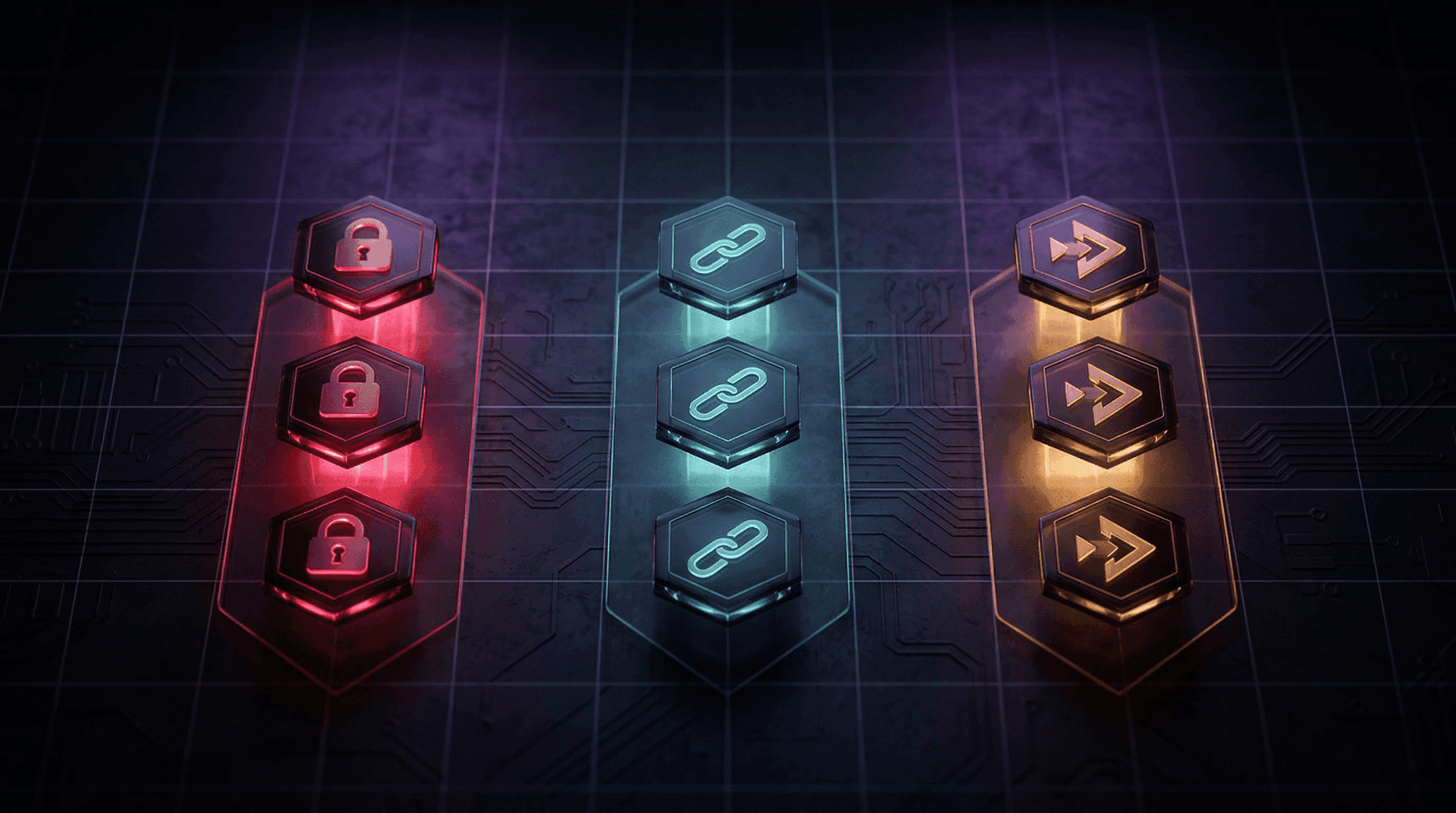
Market cap tells you who is biggest. It doesn't tell you who can freeze your funds.
The top 10 stablecoins by market cap collectively hold over $287 billion in circulating supply. Seven of those ten have admin keys, asset protection roles, or protocol-level mechanisms that allow a single private entity to stop your money from moving. Not a court. Not a regulator. A company. Sometimes one person at a company. Tether has used this power to freeze $4.2 billion in USDT as of early 2026. PayPal's issuer can wipe your PYUSD balance to zero in two transactions. Ripple's CTO confirmed RLUSD can be clawed back from your wallet.
For a treasury manager or DeFi protocol team choosing a stablecoin, the ranking that matters isn't by market cap. It's by architecture.
Key Takeaways
- Tether has frozen $4.2 billion in USDT total, including 4,163 addresses blacklisted in 2025 alone (BlockSec).
- PYUSD and USDG (both Paxos-issued) have an
assetProtectionRolethat can wipe a balance to zero - no court order required (LlamaRisk). - The GENIUS Act mandates that regulated stablecoins support "seize, freeze, burn, or prevent transfer" - making freeze capability a legal requirement for US-regulated issuers.
- DAI is the only top-10 stablecoin with no issuer-level blacklist, but roughly 72% of its collateral is centralized assets — USDC, other fiat-backed stablecoins, and RWAs (Bluechip) — assets that are 1:1 fiat-backed and freezable, not genuinely over-collateralized.
- 43% of hedge funds plan DeFi integration, making stablecoin freeze risk a material counterparty concern - not just a philosophical one.
The Map: Three Architecture Categories
The top 10 stablecoins by market cap as of April 2026 fall into three distinct architecture types. Market cap rank barely correlates with architectural risk. A stablecoin at rank seven can have stricter freeze controls than one at rank two.
Here's the full breakdown:
| Stablecoin | Ticker | Market Cap | Architecture | Can Freeze? | Decentralization |
|---|---|---|---|---|---|
| Tether | USDT | $184B | Fiat-backed, centralized | Yes - blacklist + destroy | Low |
| USD Coin | USDC | $78B | Fiat-backed, centralized | Yes - blacklist only | Low |
| Ethena USDe | USDe | $5.8B | Synthetic, delta-hedged | Partial - sUSDe only | Medium |
| Dai | DAI | $5.4B | Mixed: crypto over-collateralized + ~72% centralized/fiat/RWA 1:1 | No (token layer) | Medium-High |
| World Liberty USD | USD1 | $4.4B | Fiat-backed, centralized | Yes - 272 addresses frozen | Low |
| PayPal USD | PYUSD | $3.9B | Fiat-backed, trust issuer | Yes - wipe to zero | Low |
| Global Dollar | USDG | $2.0B | Fiat-backed, regulated | Yes - same as PYUSD | Low |
| Decentralized USD | USDD | $1.5B | Over-collateralized/algorithmic | No (token layer) | Medium |
| Ripple USD | RLUSD | $1.3B | Fiat-backed, centralized | Yes - clawback | Low |
| United Stables | U | $1.0B | Asset-backed | Assumed yes | Low-Medium |
Sources: Bitrue market cap data, April 2026. Freeze data from issuer contracts and public disclosures documented in the sections below.
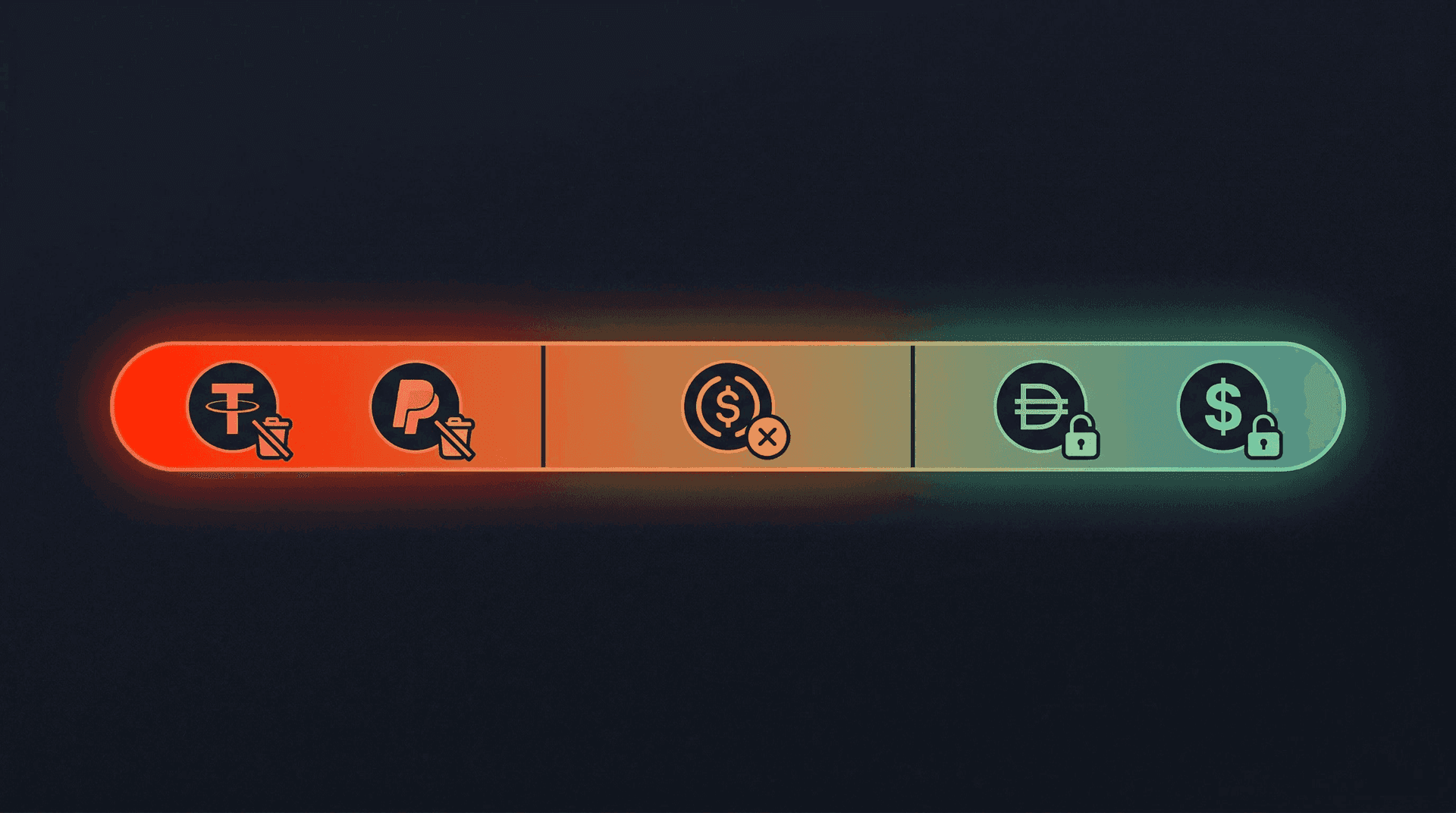
Category 1: Fiat-Backed CeFi IOUs
Seven of the top 10 stablecoins - USDT, USDC, USD1, PYUSD, USDG, RLUSD, and U - belong to this category. Their architecture is straightforward: a regulated or semi-regulated issuer holds reserves, mints tokens on demand, and retains the right to freeze or destroy those tokens.
These are not decentralized instruments. They're IOUs against a centralized custodian, with the full compliance infrastructure that implies. The question isn't whether they can freeze - they all can. The question is how aggressively, under what process, and whether that process is documented.
USDT: The Biggest Blacklist in Crypto
USDT's $184 billion market cap makes it the dominant stablecoin in global crypto markets. It also carries the most documented freeze history. Tether has frozen $4.2 billion total as of February 2026, with 4,163 addresses blacklisted in 2025 alone, locking up $1.26 billion in a single year.
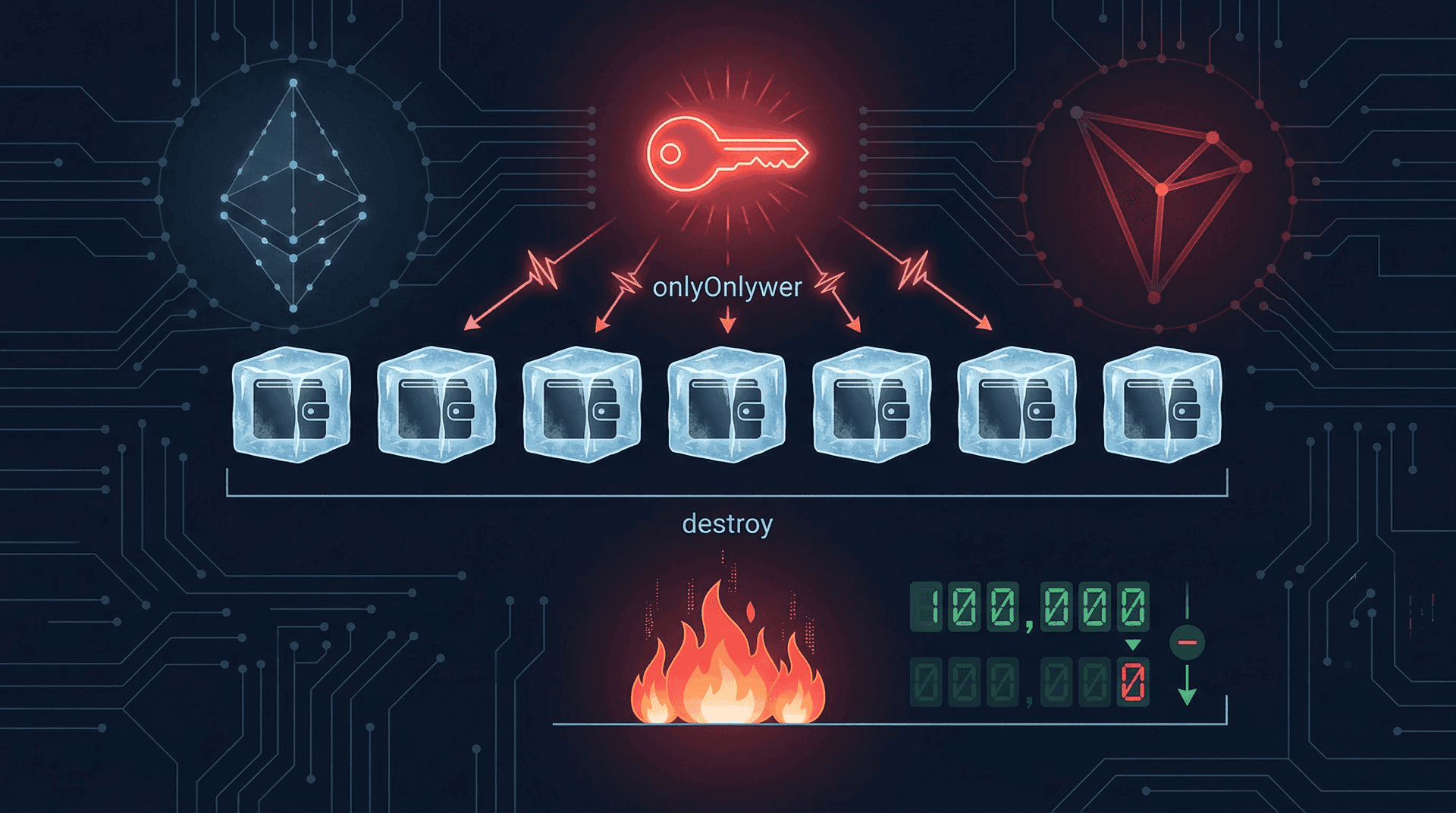
The control mechanism is a single onlyOwner key. One address. No multi-sig by default, no time-lock, no on-chain governance. Tether Operations Limited, registered in El Salvador, holds it. The contract also includes destroyBlackFunds() - which zeroes a blacklisted balance and reduces total supply. Your tokens aren't just frozen. They cease to exist.
Unfreezing requires full identity verification, documented proof-of-funds origin, and complete transaction histories. Resolution takes weeks to two years. No contractual upper limit exists on freeze duration. For a protocol holding USDT as collateral, that's not just compliance risk - it's solvency risk.
What makes USDT useful for DeFi despite this? Liquidity depth. No other stablecoin comes close on Ethereum, Tron, or BSC. Protocols accept the freeze risk because the alternative is thinner markets. That's a rational short-term trade-off. It's not a comfortable long-term position.
USDC: Blacklist Without Burn
USDC's architecture is structurally similar to USDT's, with one important difference: Circle's blacklist freezes token transfers but cannot destroy the balance. The tokens remain in the wallet, just untransferable. That distinction matters for recovery paths, though it doesn't change the practical outcome in the short term - the funds are inaccessible.
AMLBot's 2025 dataset documents roughly $117 million blacklisted across 600-plus wallets. The blacklister role is a single Ethereum address, separate from the contract owner but still concentrated. Circle is US-headquartered, registered with US money transmitter licenses, and subject to more direct regulatory oversight than Tether - but the governance of its blacklist decisions follows the same logic: one entity, its own process.
The DFINITY ckETH Minter case, documented in our governance post, illustrates the collateral-damage problem. Protocol infrastructure - not a human actor - got frozen in a compliance sweep. Downstream users of an unrelated protocol bore the cost.
PYUSD and USDG: The Paxos Two-Step
PayPal USD ($3.9B) and Global Dollar ($2.0B) are both issued by Paxos Trust Company under a New York banking charter. Paxos is among the most regulated stablecoin issuers in the US. It's also the most aggressive about documenting its freeze powers - which is worth noting, because transparency about what a counterparty can do to your funds is strictly better than opacity.
The Paxos assetProtectionRole goes beyond a standard blacklist. Step one: freeze an address. Step two: call wipeFrozenAddress() - which zeroes the balance entirely and reduces total supply. Two transactions. No balance held in escrow. The MEXC analysis of PYUSD confirms this is documented in Paxos's terms: it may freeze PYUSD and the corresponding dollar backing if required by law.
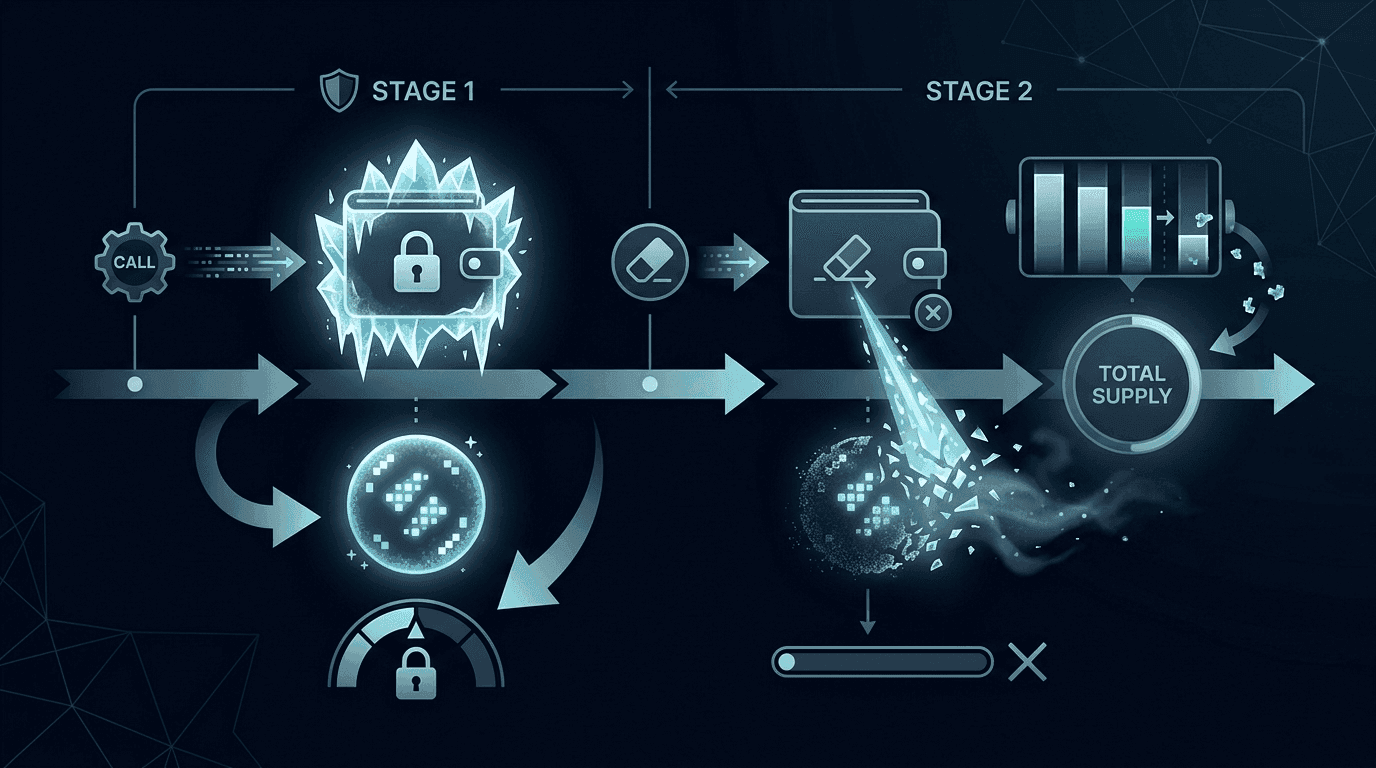
USDG, the Global Dollar issued by Paxos Singapore, uses the same ASSET_PROTECTION_ROLE pattern: freeze, unfreeze, wipeFrozenAddress. Different entity, identical architecture. Regulated stablecoin issuers adopting the GENIUS Act framework will increasingly converge on this design.
USD1: Frozen Wallets, Political Context
USD1 is World Liberty Financial's stablecoin, with approximately $4.4B in circulation. It's a newer entrant, but its freeze record is already notable: WLFI froze 215-272 wallets and burned approximately $22 million in 2025. The association with political figures has attracted scrutiny that other issuers haven't faced to the same degree.
From a pure architecture standpoint, USD1 follows the fiat-backed centralized model: single issuer, reserve-backed, freeze-capable. The Binance profile rates its decentralization as low.
RLUSD: Clawback Is Different
Ripple's RLUSD ($1.3B) has an architecture that deserves separate treatment. On XRPL, Ripple uses the protocol's built-in clawback amendment. This isn't a Solidity blacklist - it's a ledger-level mechanism that lets an issuer retrieve tokens directly from a holder's wallet without requiring the holder's signature. The effect is equivalent to destroy, but the control vector is the underlying protocol, not an admin key in a smart contract.
Ripple's CTO publicly confirmed this capability in 2025. On Ethereum, RLUSD also carries freeze functions. KuCoin's profile rates decentralization as low across both chains.
For protocol integrations, the clawback distinction matters: a standard freeze leaves tokens stranded in a wallet; a clawback removes them from your wallet entirely. Those are different failure modes for a lending protocol holding RLUSD as collateral.
U (United Stables): Opaque Backing
United Stables ($1.0B) is asset-backed with cash plus other stablecoins. The stablecoin-of-stablecoins model means freeze risk propagates from whatever stablecoins sit in the reserve - likely including USDC and USDT. Binance's profile rates it low to medium on decentralization. No public freeze event has been documented as of this writing, but the issuer retains centralized control by design.
Category 2: On-Chain Collateral (DAI and USDD)
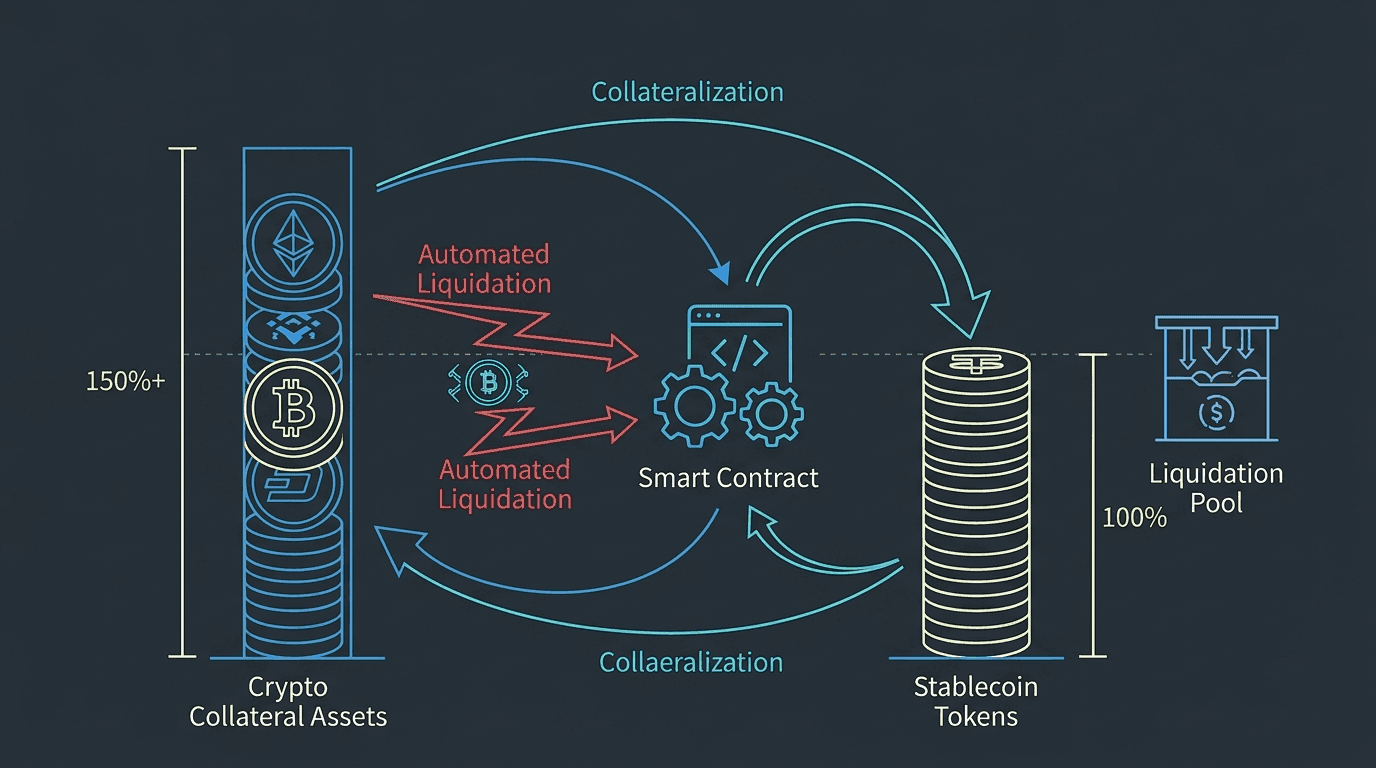
These two stablecoins are architecturally distinct from the CeFi IOU category. They're minted through on-chain collateralization, not by an issuer holding fiat reserves. The smart contracts do the minting. No single company "issues" them the way Tether issues USDT.
That distinction has direct consequences for freeze risk at the token layer. It also introduces different risks at the collateral layer. And there's an important nuance that the label "over-collateralized" can obscure: whether the collateral itself is genuinely over-collateralized crypto, or partially composed of 1:1 fiat-backed assets that carry the same risks as Category 1.
DAI: The Genuine Exception - With a Catch
DAI is the only top-10 stablecoin where the founder publicly stated "DAI is an immutable smart contract and can't be altered." Rune Christensen's statement is accurate at the token level: the DAI ERC-20 contract has no blacklist(), no freeze(), no pause() function. No admin key controls transfers. This is why DAI remains the preferred collateral in permissionless DeFi protocols. It's also why it occupies a unique position in the regulatory debate - DAI sits outside the GENIUS Act's "permitted payment stablecoin" perimeter because it lacks a compliant issuer structure.
The catch is in the collateral, and it's bigger than most rankings acknowledge. Bluechip's analysis of MakerDAO's collateral composition shows that roughly 72% is centralized assets — USDC, other fiat-backed stablecoins, and RWAs. Those portions aren't over-collateralized at all. They're 1:1 backed, just like the fiat stablecoins in Category 1, and they carry the same upstream freeze risk. USDC is freezable. RWAs can be subject to legal seizure. When nearly three-quarters of DAI's backing is effectively fiat-backed, calling DAI "over-collateralized" describes the protocol's mechanics, not the economic reality of what secures the peg.
This isn't theoretical. In March 2023, USDC depegged to roughly $0.87 when $3.3 billion of Circle's reserves were trapped at the collapsing Silicon Valley Bank. DAI, holding massive USDC collateral positions, depegged in tandem - despite having no freeze function and no direct exposure to SVB. The non-freezable token depegged because its freezable collateral lost value. That's the structural consequence of wrapping fiat-backed assets inside a non-freezable wrapper and calling it "over-collateralized."
For DeFi suitability among the current top 10, DAI still scores highest. Its protocol-level decentralization is medium-high, its token is non-freezable, and its composability across DeFi is unmatched among large-cap stablecoins. But the gap between DAI's token-layer properties and its collateral-layer reality is significant, and it's growing as MakerDAO adds more RWA exposure.
USDD: Decentralized at the Token, Centralized at the Reserve
USDD ($1.5B) is issued on Tron. Like DAI, it has no blacklist at the token layer. The project is marketed as "free from centralized intermediaries." In narrow technical terms, that's accurate.
The broader picture is more complicated. USDD depegged significantly in 2022. Its reserves are managed by the TRON DAO Reserve, a body where governance is effectively centralized around Justin Sun and TRON's validator set. The collateral isn't fully transparent to external auditors. And TRON itself, as a Layer 1, has more centralized validator structure than Ethereum.
USDD scores better than the CeFi IOUs on token-layer freeze risk. It scores worse than DAI on peg stability history, reserve transparency, and governance decentralization. For DeFi use, it's a step up from USDT in censorship resistance and a step down from DAI in trust minimization.
Category 3: Synthetic and Derivative-Backed (USDe)
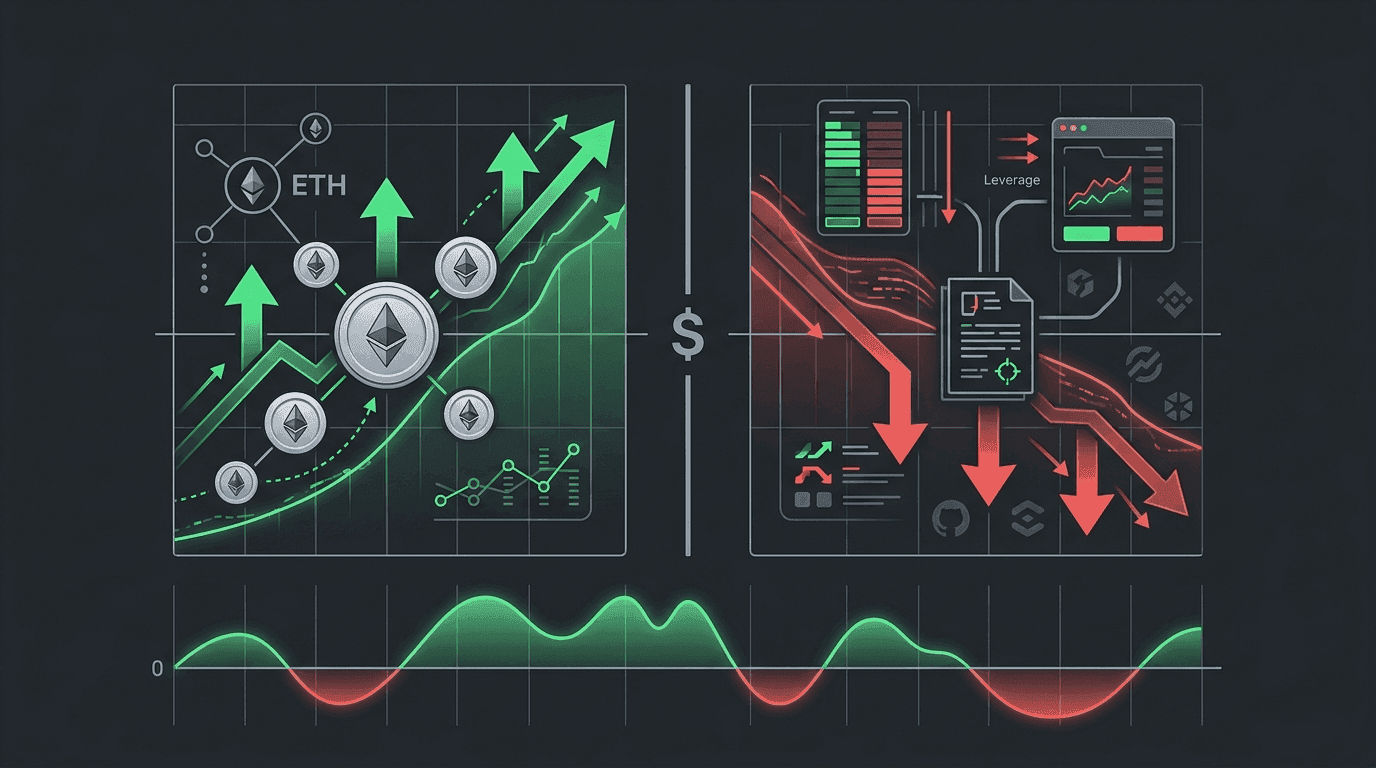
USDe is the only top-10 stablecoin built on a delta-neutral hedging model. Ethena holds long positions in spot ETH (and other assets) while maintaining equivalent short positions in perpetual futures. The net delta is approximately zero - meaning the dollar value of the collateral stays stable regardless of ETH price movements. This is fundamentally different from fiat reserves or CDP (collateralized debt position) mechanics.
USDe: On-Chain Token, Off-Chain Risk
The USDe base token has no blacklist function for standard transfers. At the ERC-20 layer, it moves without issuer interference. That's better than USDT, USDC, or PYUSD on a pure freeze-risk basis.
The complication is in the staking contract. sUSDe - the yield-bearing form of USDe - has a FULL_RESTRICTED_STAKER_ROLE that can blacklist individual addresses from the staking contract. That's not a direct freeze of USDe itself, but for the majority of users holding sUSDe for yield, the practical effect is the same: your position is locked.
The deeper risk in USDe is structural. The delta-neutral strategy depends on heavy reliance on centralized exchanges for the short leg of the hedge. CEX counterparty risk, funding rate reversals, and exchange-level freeze risk all flow through to USDe holders indirectly. It's a CeDeFi hybrid - more decentralized than a fiat-backed IOU, less decentralized than a fully on-chain CDP. Crynet rates its decentralization as medium-minus for this reason.
USDe has grown rapidly to $5.8B, driven by the yield it pays to sUSDe holders when funding rates are positive. When funding rates go negative, the yield collapses. That's a risk distinct from freeze capability but equally material for treasury decisions.
The Trade-Offs: What Each Category Is Actually Good For
No architecture is universally optimal. The right stablecoin depends on what you're optimizing for.
Liquidity vs. Censorship Resistance
USDT and USDC win on liquidity depth by a large margin. No other stablecoin comes close for large block trades, cross-exchange arbitrage, or DEX liquidity provisioning. For strategies where execution speed and market depth matter more than censorship resistance, the CeFi IOUs are rational choices - with the understanding that you're accepting issuer-level counterparty risk.
DAI offers the best balance for DeFi-native use cases: strong liquidity on Ethereum, no token-layer freeze risk, and wide protocol acceptance as collateral. The collateral composition risk is real but manageable for positions below the scale where MakerDAO's USDC exposure becomes a single-point-of-failure concern.
Regulatory Compliance vs. DeFi Composability
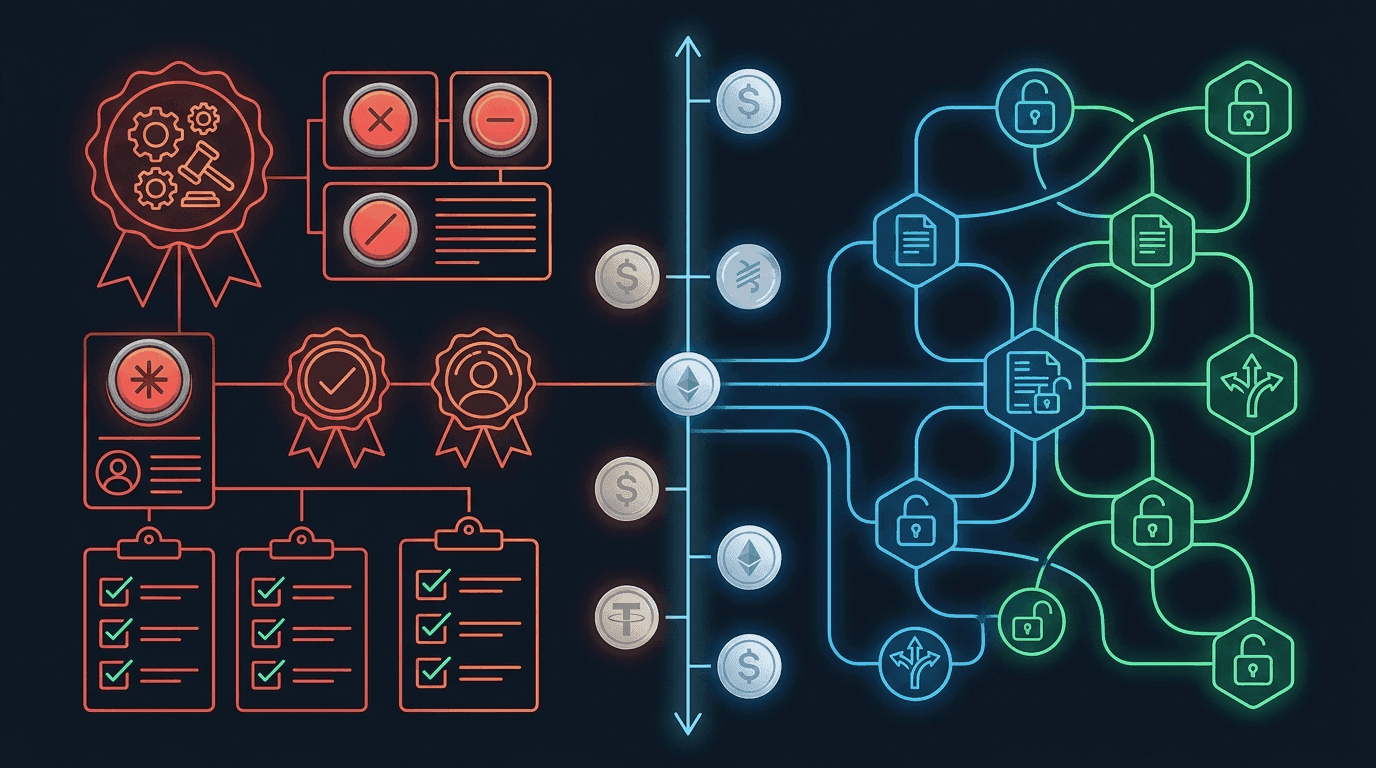
Here's the structural tension the GENIUS Act has crystallized: the tokens best suited for regulatory compliance (USDT, USDC, PYUSD, USDG) are the ones least suitable for censorship-resistant DeFi. The Act explicitly requires "seize, freeze, burn, or prevent transfer" capability. That's not a design trade-off you can optimize away - it's a legal mandate.
DAI, USDe, and USDD fall outside the GENIUS Act's "permitted payment stablecoin" perimeter. Under MiCA, they'd likely be classified as asset-referenced tokens (ARTs) or remain unregulated, distinct from the e-money token (EMT) category for fiat-backed stables. That regulatory ambiguity cuts both ways: they avoid GENIUS Act compliance mandates but face uncertainty in regulated institutional contexts.
For institutional treasury, the practical answer is often to hold both: regulated stablecoins for counterparties that require GENIUS Act compliance, and DAI or similar for DeFi collateral and permissionless operations. That two-tier approach is increasingly common among sophisticated DeFi treasuries.
What Different Users Actually Need
Payment processors and B2B settlement: Regulated fiat-backed stables (USDC, USDT, PYUSD) are the most practical choice. Compliance tools exist, regulatory status is clearer, and counterparty acceptance is highest. Accept that freeze risk exists and build recovery workflows accordingly.
DeFi protocol collateral: DAI is the strongest fit among the current top 10, but with a material caveat: roughly 72% of its collateral is centralized assets (USDC, other fiat-backed stablecoins, and RWAs), which are 1:1 fiat-backed and freezable. For protocols that need genuinely over-collateralized, non-freezable backing all the way down, DAI's collateral composition is a structural weakness. USDe is viable but with sUSDe blacklist caveat and CEX dependency. USDT and USDC work with explicit acknowledgment that a blacklist event could trigger liquidation cascades.
Cross-border and censorship-sensitive use cases: DAI at the token layer, but with clear understanding that its "over-collateralized" label masks a ~72% centralized, fiat-backed collateral composition. Nothing in the current top 10 fully solves the censorship resistance problem for large-scale use - a point our non-freezable stablecoin post covers in detail. UPD addresses this gap directly: users self-mint against stETH, which is itself non-freezable, making the over-collateralization genuine all the way through the stack. No admin key, no issuer, ASP-layer compliance instead of token-level freezing.
Yield generation: sUSDe leads for yield when funding rates are positive, with staking blacklist risk. DAI's DSR (Dai Savings Rate) offers more predictable but lower returns. USDD yields vary with TRON governance decisions.
What This Means for Institutions
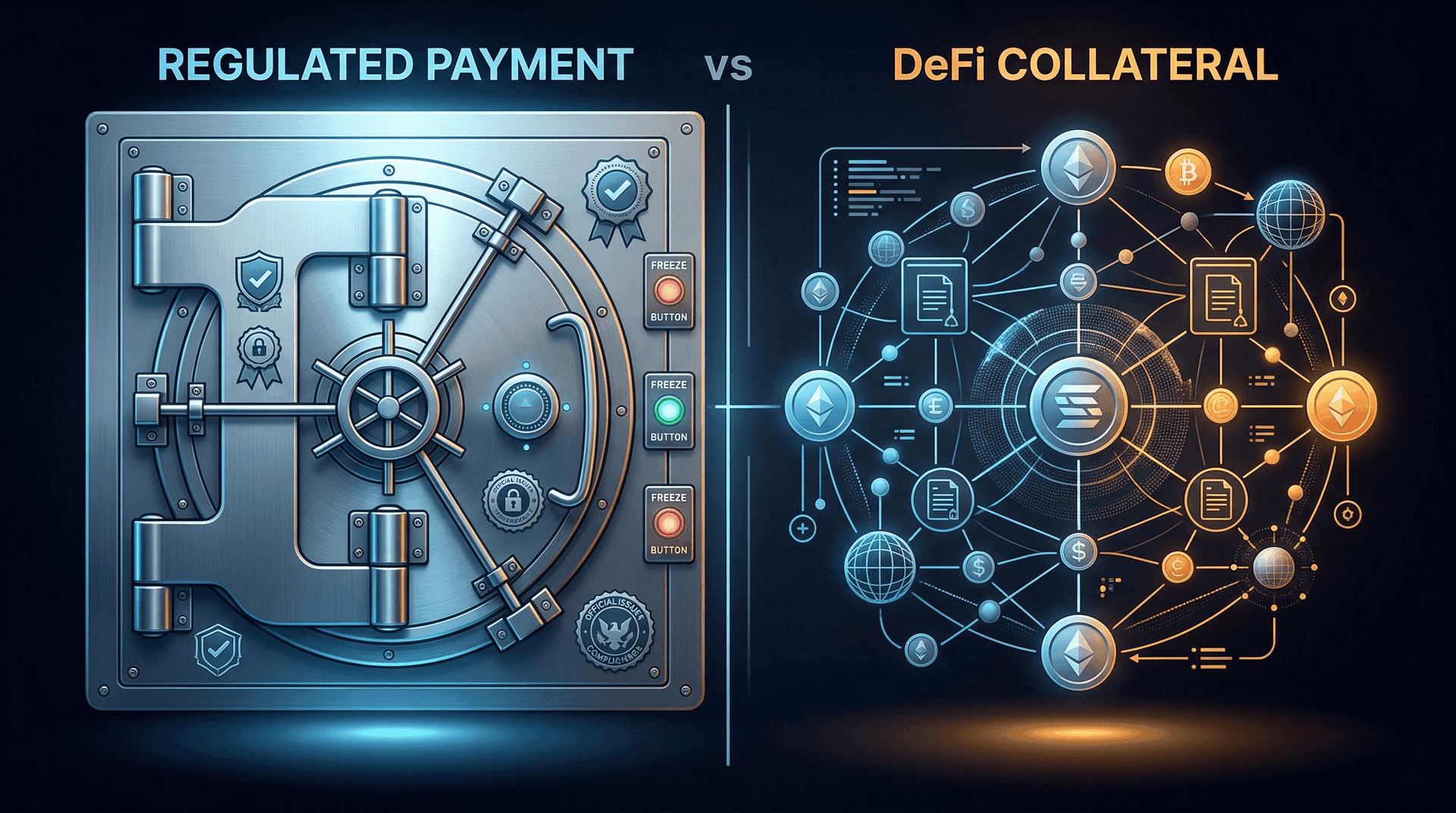
The stablecoin market is splitting into two tiers, and the split isn't primarily about market cap.
Tier one: regulated, fiat-backed, freeze-capable stablecoins designed for compliance-first use cases. USDT, USDC, PYUSD, USDG, RLUSD, USD1. These are CeFi IOUs. They work the way a bank deposit works - with a custodian, a compliance department, and a freeze mechanism. Institutions required to operate within GENIUS Act frameworks will largely use this tier.
Tier two: on-chain, collateral-backed stablecoins with varying degrees of issuer-level control. DAI, USDD, USDe. These are more suitable for permissionless DeFi. They carry different risks - collateral composition, protocol governance, peg stability history - but the freeze mechanism isn't the primary risk at the token layer.
Evaluating Stablecoin Risk Beyond Market Cap
The 43% of hedge funds planning DeFi integration need a framework that goes beyond market cap rankings. Here's a practical checklist:
Freeze capability: Does the contract have a blacklist(), freeze(), pause(), or clawback function? Who holds the key? Is it multi-sig? Our Solidity-level guide documents the exact code for every top-10 stablecoin.
Governance of freeze authority: Is there a documented process before a freeze is executed? What's the appeals path? What's the maximum freeze duration? For every major issuer today, the honest answer is: one entity, its own process, no guaranteed timeline.
Collateral transparency: For over-collateralized stablecoins, what's in the reserve? DAI's USDC exposure and USDD's opaque reserve are different risk vectors than a direct blacklist, but they're real.
Regulatory status: GENIUS Act-compliant issuers are more predictable for institutional use but carry mandatory freeze capability. Non-compliant tokens offer more censorship resistance but face regulatory uncertainty.
Protocol-layer vs. token-layer risk: USDe has no token-layer blacklist but staking-layer restrictions. DAI has no token-layer freeze but collateral-layer upstream risk. These distinctions matter when you're building downstream DeFi logic.
The governance analysis we published on who freezes stablecoins goes deeper on the oversight gap: not just whether freeze powers exist, but who exercises them, under what process, and what recourse exists when they get it wrong.
Frequently Asked Questions
Which stablecoin in the top 10 is the most censorship-resistant?
At the token layer, DAI is the only top-10 stablecoin with no admin key, no blacklist, and no freeze function. Rune Christensen confirmed in 2024 that the contract is immutable. But censorship resistance requires more than a non-freezable token. Roughly 72% of DAI's collateral is centralized assets — USDC, other fiat-backed stablecoins, and RWAs (Bluechip), which are 1:1 fiat-backed and freezable. That's not over-collateralized. That's a non-freezable wrapper around freezable backing. Among the top 10, DAI is the best option at the token layer. At the collateral layer, the gap is real.
Does the GENIUS Act require all stablecoins to have freeze capability?
The GENIUS Act requires this only for "permitted payment stablecoins" - the regulated, fiat-backed category. DAI, USDe, and USDD would fall outside this perimeter under current interpretations. They wouldn't qualify as permitted payment stablecoins, which means they avoid the freeze mandate but also lose the clearer regulatory status that comes with compliance.
Can a stablecoin freeze affect a DeFi protocol that holds it as collateral?
Yes, and this has happened. The DFINITY ckETH Minter case involved Circle freezing a wallet belonging to protocol infrastructure. When a lending protocol holds USDC or USDT as collateral, a blacklist event affecting that collateral position can trigger liquidation cascades or make a position impossible to unwind. Our Solidity guide covers why the freeze type matters: a blacklist-only freeze leaves tokens stranded, while a destroy function removes collateral from existence.
Is USDe safer than USDC from a freeze standpoint?
At the base token layer, yes - USDe has no blacklist function for standard transfers. At the staking layer, no - sUSDe has a FULL_RESTRICTED_STAKER_ROLE that can blacklist accounts from the staking contract. For users holding USDe without staking it, the freeze risk is lower than USDC. For users holding sUSDe for yield, it's roughly comparable to other freeze-capable systems, with the additional wrinkle that the staking restriction may be less visible to users than an explicit blacklist.
How should a DeFi protocol evaluate which stablecoin to accept as collateral?
Start with the freeze mechanism type (from our Solidity guide): blacklist-only, blacklist-plus-destroy, freeze-plus-wipe, clawback, or global pause. Each has a different failure mode for a collateral position. Then assess governance: who holds the key, is there a documented process, what's the recovery timeline? Then collateral composition for over-collateralized stables. Finally, weigh liquidity depth against the risk profile. There's no universally right answer - it depends on the protocol's risk tolerance and the use case.
The Map Is Not the Territory
A market cap ranking gives you one dimension of stablecoin risk. This map gives you three more: architecture, freeze capability, and regulatory positioning. They don't always point the same direction.
USDT is the most liquid stablecoin in the world and the one with the largest documented freeze history. DAI has the strongest DeFi composability of any top-10 stablecoin, but its "over-collateralized" label masks a reality where more than half the backing is 1:1 fiat assets with upstream freeze risk. USDe offers base-token censorship resistance with staking-layer restrictions and CEX dependency. None of these are simply "safe" or "unsafe" - they're trade-offs. And none of the current top 10 delivers genuine over-collateralization with non-freezable collateral all the way through the stack.
The GENIUS Act is pushing regulated stablecoins toward explicit, mandatory freeze capability. That's not a surprise or a conspiracy - it's what compliance-focused regulation looks like. The question for institutions and protocol teams is where that leaves assets that don't fit the GENIUS Act perimeter, and what architectural alternatives exist.
For the deeper structural question - why every system with a centralized chokepoint defaults to over-freezing, and what an alternative compliance architecture looks like - Your Money Is Not Your Money is the place to start. For the exact Solidity mechanics behind the freeze risks described here, the forensic guide has the code. And for a full treatment of non-freezable stablecoin design, the pillar post covers what "non-freezable" actually means at the architecture level - and what it costs.
The $287 billion stablecoin market has a hierarchy that market cap rankings hide. Understanding it is table stakes for any institution taking DeFi seriously in 2026.