
April 11, 2026 · Permissionless Technologies
The $4.2 Billion Question: Who Freezes Your Stablecoins?
No court order. No appeals process. No time limit. Who controls stablecoin freeze powers across USDT, USDC, and PYUSD, and who doesn't oversee them?

Tether's blacklist is managed by a company registered in El Salvador. Circle's blacklister is a single Ethereum address. Paxos has an assetProtectionRole that can wipe your balance to zero. Who gave them this power? Who oversees it? And what happens when they get it wrong?
These aren't rhetorical questions. Across the four largest regulated stablecoins, freeze authority is held by a handful of private entities operating under terms of service that most users never read, with no court supervision, no mandatory appeals process, and no public audit of how those powers are exercised. The combined value they've locked down exceeds $4.2 billion. The governance structures overseeing those decisions would fit on a single index card - and not a very full one.
Key Takeaways
- Tether's $4.2 billion in freezes is controlled by a single
onlyOwnerkey with no multi-sig, no time-lock, and no on-chain governance (Reuters, 2026). - No major stablecoin issuer publishes a mandatory appeals process, proportionality test, or maximum freeze duration.
- The GENIUS Act requires issuers to freeze on demand but says nothing about oversight, due process, or accountability for errors.
- Courts in the UK, Uganda, and India are imposing proportionality requirements on bank freezes. Stablecoin issuers currently operate outside this framework.
- The incentive structure is identical to traditional finance: $3.2 billion in AML fines makes over-freezing rational.
Who Controls Tether's Blacklist?
Tether is the largest stablecoin by market cap, with over $143 billion in circulation as of early 2026. It's also the most aggressive user of freeze powers. In February 2026, Tether publicly disclosed that it has frozen $4.2 billion across thousands of addresses since its founding. In 2025 alone, BlockSec documented 4,163 addresses blacklisted, locking up $1.263 billion in USDT.
The Solidity mechanics are well-documented: a single onlyOwner key controls the blacklist. One Ethereum address. No multi-sig requirement by default. No time-lock. No on-chain governance vote. The entity behind that key is Tether Operations Limited, incorporated in El Salvador after relocating from the British Virgin Islands. El Salvador has no dedicated regulatory body overseeing stablecoin issuance. There is no public ombudsman. There is no published freeze policy with defined criteria.
What does the unfreezing process look like in practice? Tether's own documentation and public disclosures indicate that affected users must provide full identity verification, documented proof of funds' origin, and complete transaction histories. Resolution timelines range from weeks to, in contested cases, up to two years. That timeline is not bounded by any contractual commitment or regulatory requirement. It reflects whatever internal process Tether chooses to apply.
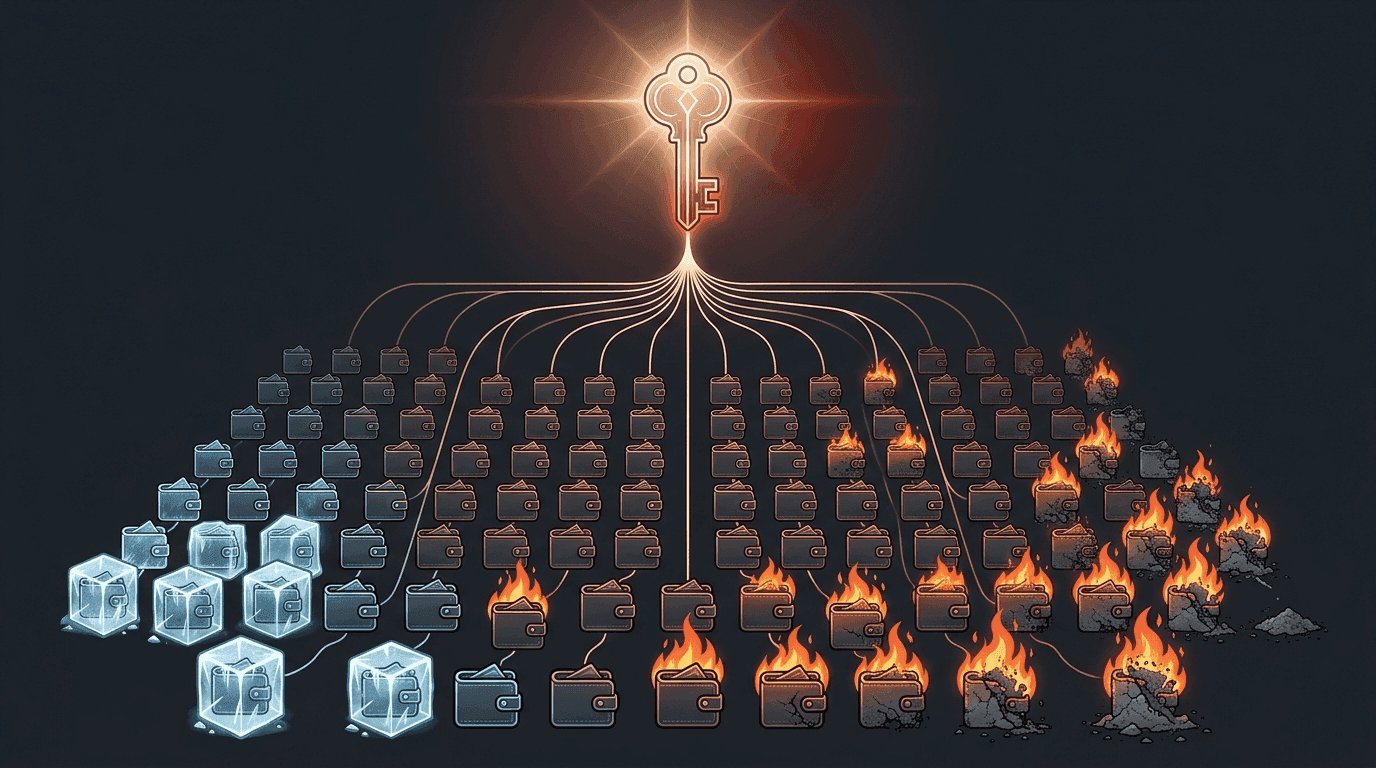
Contrast that with what a government needs to obtain a court freezing order: evidence presented to a judge, a proportionality assessment, a defined time limit, and a mechanism for the account holder to contest the freeze. Bank regulators impose similar requirements on traditional account freezes. Tether is bound by none of them. That isn't an accusation - it's an accurate description of the current legal framework, and it's worth sitting with.
Who Is Circle's Blacklister?
Circle is a US-based company headquartered in Boston, regulated as a money transmitter in the states where it operates. It's subject to more direct US oversight than Tether, and its compliance posture is generally considered more conservative. But the on-chain architecture of USDC's freeze power is structurally similar: a dedicated blacklister role assigned to a single Ethereum address, separate from the contract owner but still concentrated in one key.
BlockSec's on-chain analysis and AMLBot's 2025 dataset document roughly $117 million blacklisted across 600-plus USDC wallets. The first USDC blacklist transaction - locking 100,000 USDC in August 2020 - is on-chain at 0x15cbde1b9bf285db50e22eeff1a7d04ea267dd94726df8ecabdb4cb6c2b590cb. Every subsequent freeze followed the same path: one address calling blacklist(), no prior notice, no hearing.
The DFINITY Foundation case illustrates the collateral-damage problem. In 2026, Circle froze a wallet belonging to the DFINITY ckETH Minter - a piece of protocol infrastructure, not a human actor suspected of wrongdoing. The wallet was caught in a compliance sweep. The downstream impact affected users of an unrelated system. Legal proceedings followed. How long did it take to resolve? Weeks. What was the documented appeals process? There wasn't a public one.
That gap - between Circle's US regulatory standing and the actual governance of its freeze decisions - is worth examining. A US-regulated money transmitter is subject to Bank Secrecy Act requirements, OFAC compliance programs, and state money transmission laws. Those rules govern what Circle must monitor and report. They say almost nothing about the process Circle must follow before freezing a specific address, how long it can hold a freeze without review, or what a user can do to contest a decision.
How Does Paxos Decide to Wipe Your Balance?
Paxos Trust Company operates under a New York banking charter - about as regulated as a stablecoin issuer gets in the US today. It issues PYUSD (PayPal's stablecoin), USDG, and previously BUSD. It also explicitly documents its freeze powers in its terms and conditions, which is more than most issuers do.
The Paxos architecture adds a second step beyond a standard freeze. The assetProtectionRole can first freeze an address, then call a destroy function that zeros out the balance entirely and reduces the total token supply. Two transactions. No balance held in escrow awaiting resolution - the tokens are gone. Paxos has publicly stated that it may freeze PYUSD, USDP, and USDG - and the corresponding dollar backing - if required to do so by law. The same assetProtectionRole pattern appears in PAXG (Paxos Gold), where on-chain evidence documents actual address freezes.
To be fair to Paxos: the explicit documentation is better governance practice than opacity. Users of Paxos products know, in writing, that this power exists. That's different from issuers who bury or obscure their freeze capabilities. But disclosure isn't the same as oversight. Knowing that a power can be exercised is not the same as having a process that constrains how and when it's exercised. The question isn't whether Paxos can wipe your balance - it plainly can. The question is who reviews that decision before or after it's made.
What Oversight Exists for Stablecoin Freezes?
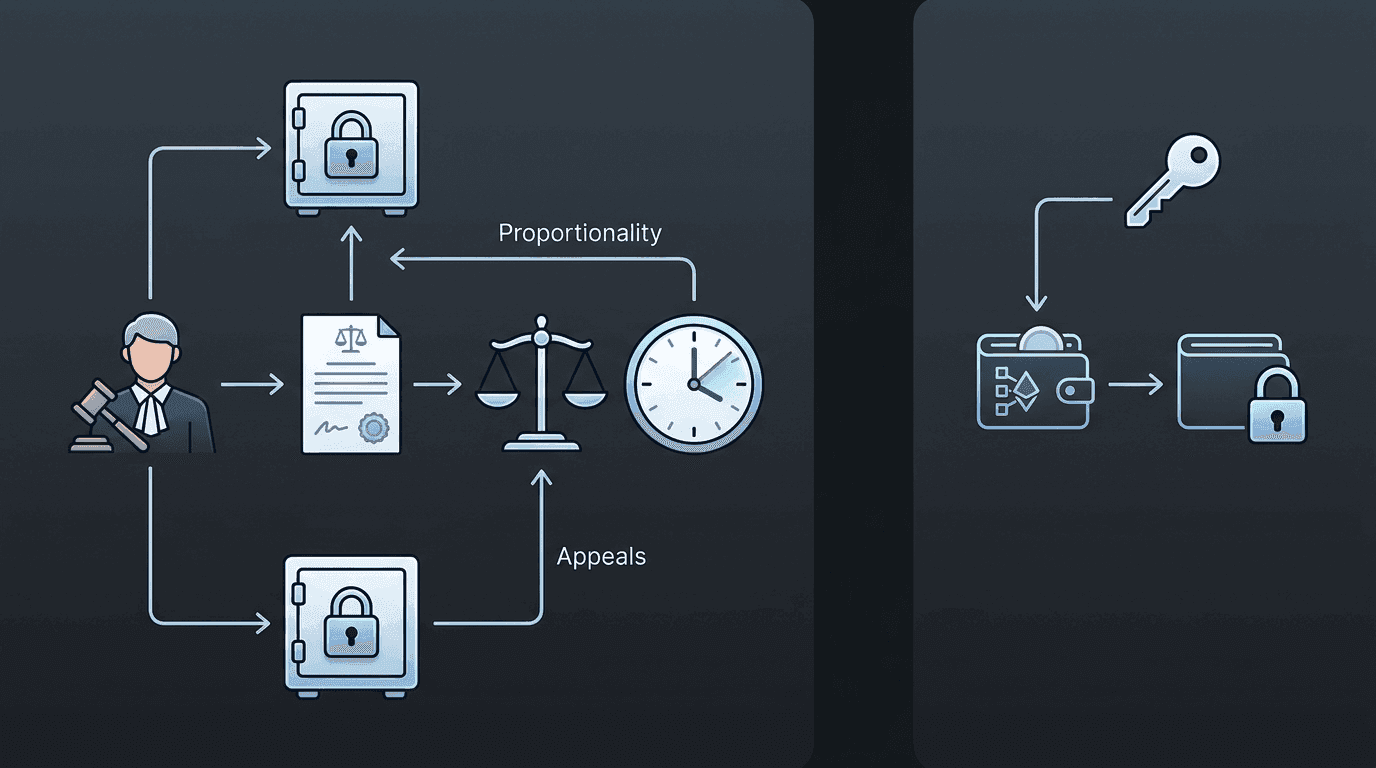
The honest answer: almost none that's structurally guaranteed. No court order is required before a stablecoin freeze, unless the freeze is being executed on behalf of law enforcement with a specific legal mandate. No independent regulator reviews freeze decisions for proportionality. No mandatory time limits bound how long a freeze can persist. No public appeals process is required by US law or the laws of El Salvador.
The Regulatory Gap
The GENIUS Act, passed in 2025, is the most significant piece of US stablecoin legislation to date. It explicitly requires that regulated stablecoin issuers maintain the technical capability to "seize, freeze, burn, or prevent transfer" of tokens. This is a mandate, not an option. Regulated stablecoins that want to operate in the US must have freeze powers built into their contracts. What the GENIUS Act does not do is specify how that power must be governed, what procedural protections must exist before it's exercised, or what remedies a wrongly frozen user can access.
The August 2025 executive order targeting "politicized or unlawful debanking" gestures at the structural problem but applies primarily to banks and their treatment of lawful businesses - not to stablecoin issuers freezing on-chain addresses. The JDSupra analysis notes that the executive order's enforcement mechanisms remain untested and its scope ambiguous.
Courts Are Setting the Standard - for Banks
Compare this to how courts are treating traditional bank account freezes. The High Court of England recently refused to dismiss a case against HSBC Kopp, where an account was frozen during a "safeguard review" with claimed losses of $1.68 million. The court held that the reasonableness of the bank's conduct was a live question for trial. Uganda's High Court issued a 2026 order confirming that an account couldn't remain frozen after an acquittal - even though it had been frozen since 2023. India's Madras High Court ruled that freezing only the disputed amount, not the entire balance, is a constitutional requirement.
These courts are developing a body of proportionality doctrine for financial freezes. Stablecoin issuers currently operate outside it entirely.
Is This the Same Pattern as PayPal and Stripe?
Yes - and we've documented this architecture in detail. The pattern is the same whether the intermediary is a fintech app or a stablecoin smart contract: private entities holding freeze powers with limited procedural constraints, operating under incentive structures that make over-freezing rational.
The Asymmetric Incentive
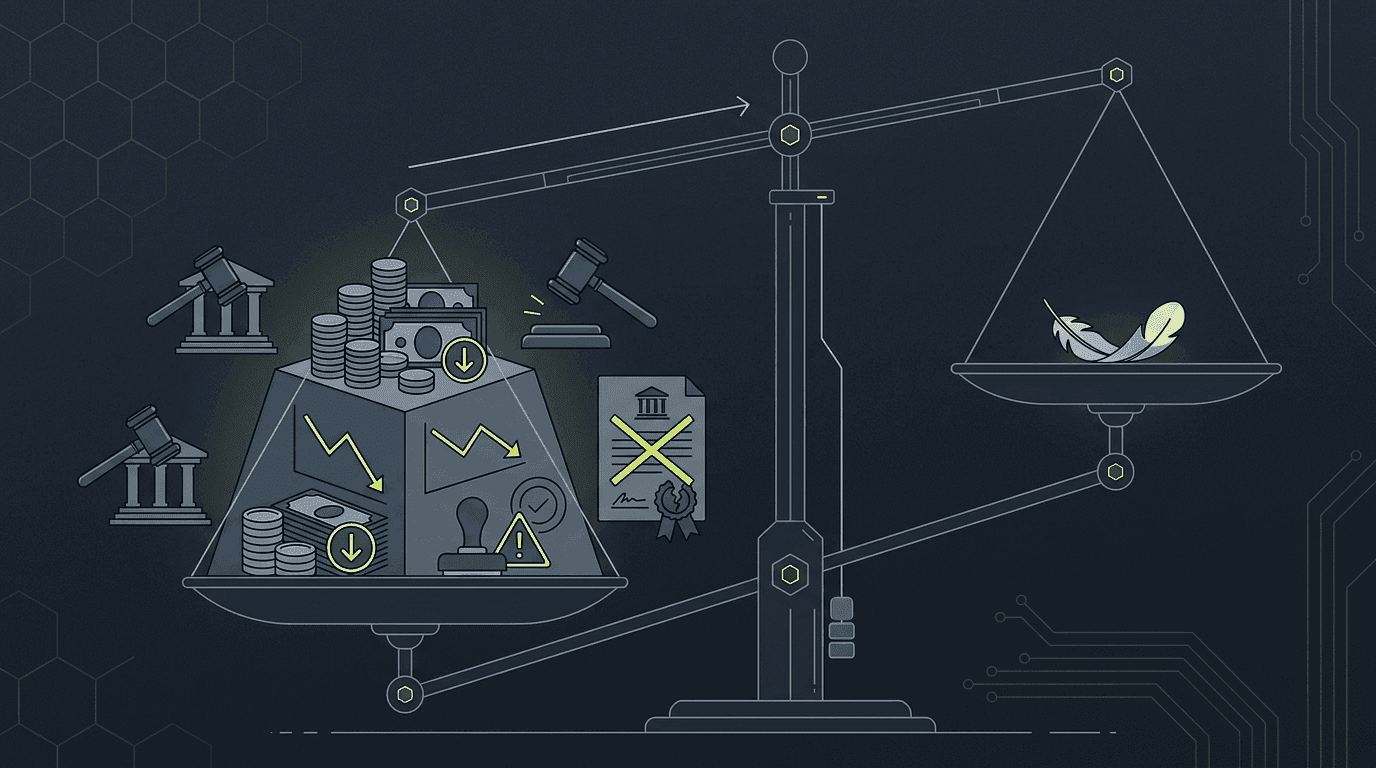
The statistics are instructive. In 2024, financial institutions paid more than $3.2 billion in AML-related fines globally. TD Bank alone was hit with a $3 billion penalty. The downside of missing a suspicious transaction is existential: billion-dollar fines, criminal charges, charter revocation. The downside of freezing an innocent user's account is a complaint, maybe a lawsuit years later, maybe nothing at all. Rational compliance teams optimize for one-sided risk.
Consider the cases. PayPal froze three users' accounts for 180 days and then permanently seized balances of $27,000, $43,000, and $172,000. No specific reason was given. Hawai'i settled for $6 million over Venmo's systematic automated freezes with no human review. The CFPB's consent order against Cash App found that frozen accounts received only boilerplate responses with no remediation path. In Malta, an arbitration decision against Crypto.com (Foris DAX MT Ltd) found that a customer's account had been blocked since June 2024 with no valid reason given - the company relied on a "sole discretion" clause in its terms of service.
What distinguishes stablecoin freezes from these cases isn't the governance architecture - it's more similar than different. What distinguishes them is that stablecoin freezes are harder to contest because they happen at the protocol layer, outside the banking supervision framework that gave regulators standing to bring those enforcement actions. UK law firms now advertise specialized practices for frozen crypto accounts. Legal recovery is possible, but slow, expensive, and uncertain.
Different technology. Same architecture.
What Happens When They Get It Wrong?
The standard defense of issuer freeze powers is that they're targeted: used against wallets with documented links to fraud, sanctions evasion, or terrorist financing. In many cases, that's accurate. A significant share of the 4,163 USDT addresses frozen in 2025 were plausibly linked to illicit activity. But chain analysis is probabilistic, not deterministic. Tainted funds move. They pass through DEX liquidity pools, cross into bridging contracts, get split across dozens of wallet hops. Innocent counterparties receive contaminated funds without knowing it, and their wallets get flagged by the same heuristics.
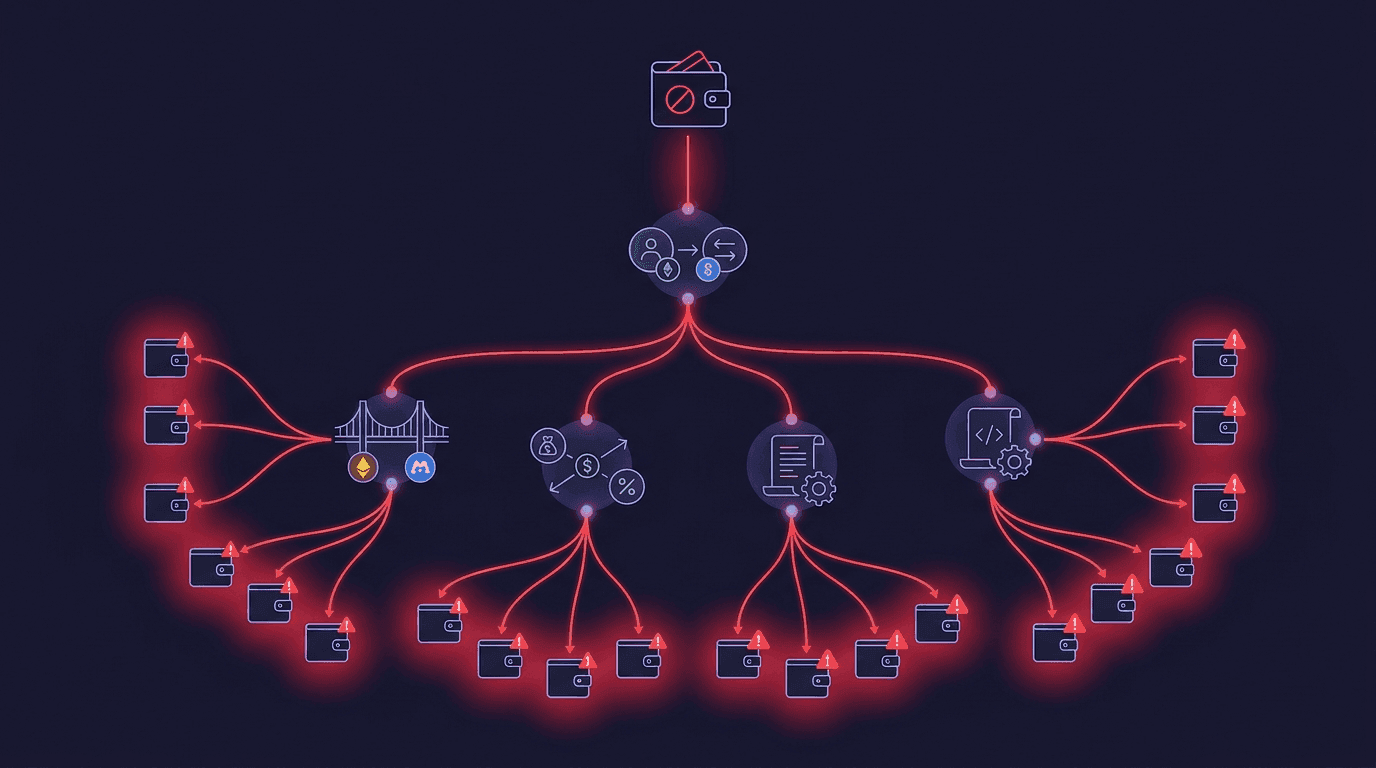
This is the "taint contagion" problem. It's not hypothetical. BlockSec's analysis traces how blacklisted USDT moves through DeFi infrastructure, and how the blacklisting response to one wallet can cascade through liquidity pools to freeze addresses with no direct connection to the original bad actor. The DFINITY ckETH Minter case is a documented example: protocol infrastructure frozen because funds it processed were downstream of a blacklisted wallet.
What's the recovery path when this happens? It's long. Tether's unfreezing process requires complete transaction history documentation and identity verification, with resolution timelines stretching to two years for contested cases. Circle has no public appeals process. Paxos documents its freeze authority without documenting its review mechanism. For a business that holds treasury in stablecoins - a corporate treasury, a DAO's operational wallet, a protocol's fee collector - a two-year freeze is an existential event.
Is this a feature or a bug? That depends on your vantage point. From an AML compliance perspective, strict freeze powers with high unfreezing friction deter sophisticated actors from attempting to use stablecoin issuers as recovery paths for tainted funds. From a due process perspective, the same friction makes innocent users bear costs that courts in the UK, Uganda, and India are now requiring banks to mitigate. Stablecoin issuers aren't banks, and the legal frameworks that protect bank customers don't automatically extend to on-chain assets.
Courts are catching up. But they're doing it case by case, country by country, while $4.2 billion sits frozen.
Can the GENIUS Act Fix This?
The GENIUS Act resolves one question definitively: regulated stablecoins must have freeze powers. That debate is settled in the US. What the Act doesn't address is the governance of those powers once granted. There are no provisions mandating a pre-freeze review process, a maximum freeze duration before court review, a proportionality standard, or a user appeals mechanism.
The Latham & Watkins analysis notes that the GENIUS Act's freeze requirements are primarily designed to facilitate law enforcement coordination - issuers need the technical capability to respond when the government comes asking. The Act is less concerned with how issuers govern their own discretionary freeze decisions. That's a significant gap, given that the vast majority of freeze decisions are made at the issuer's discretion, not under direct law enforcement instruction.
The August 2025 executive order on debanking acknowledges the systemic problem. The US Treasury's own AMLA report acknowledged that systemic de-risking - where financial institutions over-exclude customers to minimize compliance risk - is a recognized policy problem. But executive orders targeting banks don't bind stablecoin issuers, whose regulatory treatment remains unsettled outside the GENIUS Act framework.
The structural asymmetry that drives over-freezing in banks - enormous downside for under-compliance, minimal downside for over-compliance - applies equally to stablecoin issuers. Until that asymmetry changes, governance improvements driven by voluntary best practices will be marginal.
What Does an Alternative Look Like?
The governance problem isn't primarily a technical one. It's a structural one: freeze authority is concentrated in issuer-controlled keys because that's the simplest way to satisfy regulatory compliance requirements. The issuer controls the asset, the issuer can freeze the asset, the issuer reports to regulators. One entity, one key, one liability chain.
An alternative design separates compliance verification from asset control. In a compliance-at-the-user layer model - sometimes called the Association Set Provider (ASP) model - users generate proofs that their transaction history meets specified compliance criteria, without transferring custody or freeze authority to an issuer. The issuer doesn't need a freeze key because the compliance gate happens before the transaction, not after. This is the design direction explored in Privacy Pools research and in architectures like UPD, where the protocol is the counterparty and no admin key exists.
What this doesn't solve is the legal mandate problem: if the GENIUS Act requires issuers to have freeze capability, ASP-style architectures either need regulatory accommodation or operate in the stablecoin-as-bearer-instrument space where regulatory treatment differs. That's a policy question, not a cryptography question. But it's worth understanding what the architectural alternative looks like, because the governance problems we've documented in this piece are structural consequences of the current design, not accidents. For a deeper look at what non-freezable stablecoin architecture involves, the pillar post on non-freezable stablecoins covers the full design space.
Frequently Asked Questions
Who actually controls Tether's freeze key?
Tether Operations Limited, incorporated in El Salvador, holds the onlyOwner key that controls USDT's blacklist on Ethereum and Tron. The specific individual or key management process behind that address is not publicly disclosed. As of 2026, Tether has used this key to freeze $4.2 billion across thousands of addresses, with no independent oversight body reviewing those decisions.
Can a frozen stablecoin address be unfrozen?
Yes, in principle. Tether's process requires identity verification, proof of funds' origin, and complete transaction history documentation. Resolution can take weeks to two years. Circle's process is not publicly documented. No issuer has a guaranteed timeline or a binding appeal mechanism. Legal action is possible but slow and expensive. UK law firms now advertise specialized practices for frozen crypto account recovery.
Does the GENIUS Act require stablecoin issuers to have an appeals process?
No. The GENIUS Act requires that regulated stablecoin issuers maintain the technical capability to freeze, seize, burn, or prevent transfer of tokens. It does not mandate a pre-freeze review process, a maximum freeze duration, a proportionality standard, or a user appeals mechanism. Those governance gaps remain unaddressed in current US stablecoin regulation.
How does Paxos's assetProtectionRole differ from a standard blacklist?
A standard blacklist prevents token transfers from a flagged address. Paxos's assetProtectionRole goes further: it can freeze an address and then destroy the balance entirely, reducing the total token supply to zero. This applies to PYUSD, USDG, and USDP. In 2025, Paxos blacklisted 62 USDC addresses (the AMLBot dataset covers cross-issuer data). Paxos publicly documents this capability in its terms and conditions, making it more transparent than most issuers - though disclosure isn't the same as governance oversight.
What's the difference between a stablecoin freeze and a bank account freeze?
A bank account freeze in most jurisdictions can be contested in court, requires proportionality (the UK, Uganda, and India have all imposed this requirement judicially), and is subject to regulatory supervision by banking authorities. A stablecoin freeze is executed at the contract layer by a private key holder, outside banking supervision, with no mandatory review period, no proportionality requirement, and no public appeals process. The user's remedies are primarily contractual (breach of terms dispute) and vary significantly by jurisdiction. Courts are beginning to apply due process frameworks to crypto account freezes, but the doctrine is nascent and inconsistent.
The Governance Gap Is the Product
Stablecoin freeze powers exist because regulators require them and compliance teams need them. That's not a controversy. What's missing is the governance layer that constrains how those powers are exercised: the procedural protections, the review mechanisms, and the accountability structures that courts have spent decades building around analogous powers in traditional finance.
The $4.2 billion frozen by Tether isn't all innocent money. Much of it isn't. But the absence of an oversight framework means there's no reliable way to distinguish the bad actors from the collateral damage, no guaranteed path to restoration for the wrongly frozen, and no structural check on over-freezing by institutions facing asymmetric incentives.
For compliance officers evaluating stablecoin exposure, the question isn't just "can this token be frozen?" The question is "who decides, under what process, and what's our recovery path if they're wrong?" The answer today, across every major issuer, is some version of: one entity, its own process, and good luck.
Understanding the mechanics is the first step. Our Solidity forensics guide covers the exact code. Our pillar post on non-freezable stablecoins covers what the alternative design space looks like. And if the structural question - why centralized financial infrastructure defaults to this pattern - is what you're after, Your Money Is Not Your Money is the place to start.
The power exists. The oversight doesn't. That's the $4.2 billion question.